When heating targeted areas in your home—such as a cold bathroom, home office, or extension—whole-house central heating can be inefficient and costly. Electric wall heaters provide an effective, direct heating solution for individual rooms, giving you precise temperature control right where you need it.
For European homes, however, the term electric wall heater can refer to several different technologies, including wall-mounted panel heaters, wall-mounted convection heaters, electric radiators, oil-filled radiators, infrared panels, and smart electric heaters. Understanding how each type works and how to choose the right voltage can help you choose a heater that provides the right balance of comfort, installation flexibility, and running cost.
Understanding Voltage for Electric Heaters in Europe: 230V vs. 220V
When shopping for an electric heater in Europe, you might notice products labeled either 230V or 220V. Understanding the difference ensures you select a device that is safe, reliable, and performs as expected.
What Is the Standard Voltage in Europe?
Across the European Union and the United Kingdom, the official standard mains electricity grid operates at 230V single-phase with a frequency of 50Hz (defined by European standard EN 50160).
To ensure grid stability across different regions, European wall outlets deliver power that fluctuates within an allowed range of 207V to 253V (230V ±10%).
230V Labeled Heaters vs. 220V Labeled Heaters
Electric heaters rely on pure resistive heating elements. According to Joule’s Law, the actual heat output (wattage P) varies directly with the square of the voltage (V), following the formula
P = V²/R
Higher Voltage --> Higher Current Flow --> Increased Wattage & Heat
Here is how labeled voltage ratings impact everyday use on European power grids:
1. Heaters Labeled "230V" or "220V–240V" (Recommended)Tailored for European Grids:
These appliances are specifically engineered for European mains supplies.
Accurate Wattage Output: When connected to a standard 230V wall socket, a 230V heater delivers 100% of its rated heating capacity (e.g., a 1,500W unit will consistently produce 1,500W of heat).
Optimized Thermal Safety & Lifespan: Internal components—such as thermostats, thermal cut-offs, relays, and internal wiring—are rated for continuous operation up to 240V, ensuring maximum durability and safety compliance.
2. Heaters Labeled "220V"Originally Designed for 220V Markets:
Appliances labeled strictly for 220V are typically intended for domestic markets in regions using 220V grids.
Higher Wattage & Overpowering: When a 220V heater is plugged into a European 230V socket, the voltage is approximately 4.5% to 9% higher than the unit's native rating.
Example: A 220V heater rated at 2,000W will actually draw roughly 2,185W on a 230V European outlet—an increase of nearly 9% in heat output.
Increased Thermal Stress: While a small increase in heat might sound beneficial, it forces the internal heating element to run at higher surface temperatures than originally designed. This can trigger built-in thermal safety switches prematurely, shorten element lifespan, and accelerate wear on internal switches.
| Parameter | 230V Labeled Heater | 220V Labeled Heater |
| Compatibility | Fully compliant with EU / UK mains | Designed for 220V grids |
| Performance on EU Grid | Operates exactly at rated wattage | Runs ~9% higher than rated wattage |
| Component Stress | Normal operating parameters | Higher thermal and electrical stress |
| Safety Certifications | Standard CE / GS / UKCA rating | May lack specific 230V EU certification |
Key Takeaway for Buyers in Europe
Always look for heaters explicitly rated for 230V 50Hz or 220V–240V 50Hz. These units provide the exact heat output listed on the package, adhere to strict European safety guidelines (CE / GS / UKCA), and deliver long-term reliability without overheating internal components.
What Is an Electric Wall Heater?
An electric wall heater is a fixed heating unit mounted directly onto or recessed into a wall. Unlike portable space heaters that plug into standard wall outlets and sit on the floor, wall heaters are permanently hard-wired into your home’s electrical circuit. Cold air is drawn into the unit, passed across an electric heating element, and circulated back into the room via natural convection or a built-in fan.
Traditional electric wall heaters often contain an electrical resistance heating element. Cold room air enters the heater, passes over the heated element, and then warm air circulates back into the room.
Modern wall mounted panel heaters and slimline electric wall heaters may use a larger surface area to distribute heat more gently and evenly.

How Do Electric Wall Heaters Work?
Wall heaters are point-of-service heating at its very best. You can target a cold area with one of these devices. You can heat up that area without heating up the rest of the house.
Some devices rated for 240V are switchable so they can be connected to either 240V or 120V power. If 120V is chosen, though, the heat output will be halved. Note that the reverse will not work: a 120V device connected to 240V power will blow out and be ruined. Some wall heaters can be internally adjusted to run on a wide variety of different wattages.
Types of Electric Wall Heaters
1. Wall-Mounted Convection Heaters
A wall-mounted convection heater heats air as it passes through the appliance.
Cold air enters from the lower part of the heater, is warmed by an electrical heating element, and rises into the room. As the warm air cools, it falls and is heated again, creating natural air circulation.
Some models use a fan to accelerate this process.
Convection heaters are useful when you want to raise the overall air temperature of a room rather than heat one particular object or person.
2. Plug-In & Slimline Wall Mounted Panel Heaters
Ideal for low-profile installation, slimline wall heaters project only a few centimeters from the wall. Many modern versions come with plug-in options, making them a popular DIY choice that doesn't require hard-wiring.
3. Wall-Mounted Oil-Filled Radiators
An electric oil-filled radiator heater wall-mounted uses an internal thermal fluid to store and distribute heat.
The electrical element heats the fluid, which then transfers heat to the radiator body. The radiator continues releasing heat for a period after the heating element switches off.
This can provide a gentler, more consistent heating experience than some basic fan heaters.
However, oil-filled electric radiators are not automatically cheaper to run than other electric resistance heaters. Their main advantage is heat retention and comfort rather than producing more heat from the same amount of electricity.
4. Smart Electric Wall Heaters
Equipped with Wi-Fi connectivity, mobile app control, customized weekly scheduling, and automatic open-window detection, smart wall heaters allow you to optimize energy usage while effortlessly tailoring your home’s climate right from your smartphone.
Real-World Scenario:
Pre-Heating Your Home on the CommuteImagine leaving a chilly office or commuting back home on a freezing winter evening. Instead of returning to an icy living room and waiting for an hour for the space to warm up, you simply open your smartphone app while on the train or in your car:
- Remote Activation: Turn on your living room wall heater remotely 20–30 minutes before arriving.
- Precision Temperature Control: Set your desired target temperature (e.g., 21°C / 70°F) so the room reaches the ideal comfort level the second you walk through the door.
- Automated Geofencing & Scheduling: Many smart models use geofencing to automatically boost the heat when your phone enters a designated radius around your house, or drop to an eco-mode when you leave.
This seamlessly eliminates wasteful continuous heating throughout the day while ensuring instant, welcoming warmth right as you step inside.
5. Electric Bathroom Wall Heaters
Specially designed with appropriate IP ratings (e.g., IP24 or higher for moisture resistance), these compact heaters provide quick warmth in wet environments and often feature splash-proof casings or integrated towel rails.
Electric Bathroom Wall Heaters: What to Check
Bathrooms require additional attention because electricity and water are present in the same space.
When choosing electric bathroom wall heaters, check:
- The heater is specifically approved for bathroom use.
- Its IP rating is appropriate for its intended location.
- Installation complies with local electrical regulations.
- Required clearance from baths, showers, sinks, and other water sources is maintained.
- The heater is not positioned where towels or other materials can obstruct it.
Do not install an ordinary bedroom wall heater in a bathroom unless the manufacturer explicitly states that it is suitable for bathroom installation.
Electric Wall Heaters vs. Portable Space Heaters
Electric wall heaters are similar to portable space heaters because both use electricity to produce heat. The main difference is how they are installed and used.
| Feature | Electric Wall Heater | Portable Space Heater |
| Installation | Hard-wired (recessed or surface-mounted) | Plug-in to standard outlet |
| Placement | Permanent wall fixing | Portable / rests on floor |
| Thermostat | Integrated on device or wired wall thermostat | On-device only |
| Voltage | 120V / 240V (or 230V standard in Europe) | Standard household plug (120V / 230V) |
| Floor Space | Zero floor space required |
Takes up floor space |
One important point for European consumers is that not every wall-mounted electric heater is hard-wired. Some modern plug in electric wall heaters are specifically designed to mount on a wall while connecting to a standard household socket.
Therefore, always check the manufacturer's installation requirements rather than assuming that every wall-mounted heater requires professional electrical wiring.
Do Wall Heaters Use a Lot of Electricity?
Electric heaters use a high amount of power when actively running, but they can lower your overall energy bill when used strategically.
All standard electric resistance heaters convert 100% of the electrical energy they consume into heat. Unlike gas boilers, which lose a percentage of energy through exhaust flues, no heat is wasted at the point of use.
Wall heaters allow for zone heating—heating only the specific room you are using rather than warming the entire house. Integrated sensitive thermostats shut the unit off immediately once the set temperature is reached.
An electric wall heater can use a significant amount of electricity if it operates continuously at maximum power.
However, the actual electricity consumption depends on several factors:
- Heater wattage
- Room size
- Insulation
- Outdoor temperature
- Target temperature
- How long the heater operates
- Thermostat settings
- Whether the heater cycles on and off
For example, a 1,500W electric wall heater does not necessarily consume 1,500W continuously. If the thermostat reaches the desired temperature and switches the heating element off, electricity consumption will fall.
This means the rated wattage tells you the heater's maximum electrical power, rather than necessarily representing its actual 24-hour consumption.
How Much Does It Cost to Run a 1500-Watt Electric Heater for 24 Hours?
To calculate running costs, multiply the power rating in kilowatts (kW) by running hours and your local electricity rate per kWh.
Formula: Power (kW) × Times (Hours) = Total Cost (KWh)
For a 1,500W (1.5 kW) heater running continuously at full capacity for 24 hours:
Energy Consumption: 1.5 kW × 24 hours = 36 kWh
Estimated Running Costs Comparison
| Region / Country | Average Electricity Rate | Continuous 24-Hour Cost | Typical Daily Cost (50% Thermostat Duty Cycle) |
| United Kingdom | £0.26 / kWh | £9.36 | £4.68 |
| Germany / EU Average | €0.38 / kWh | €13.68 | €6.84 |
| United States | $0.16 / kWh | $5.76 | $2.88 |
Electricity rates vary by region and contract type.
In reality, a heater governed by a thermostat cycles on and off (typically running ~50% of the time once a room is warm), cutting real-world daily consumption roughly in half.
What Is the Cheapest Electric Heater to Run?
While all electric resistance heaters operate at 100% thermal efficiency—converting 1 kW of electricity into 1 kW of heat—the cheapest electric heater to run is the one equipped with advanced energy-saving controls and thermal storage features.
Rather than relying on raw heating power alone, modern electric heaters minimize running costs by giving you complete control over when, how, and where energy is consumed. When shopping for a cost-effective heater in Europe, prioritize models that feature the following technologies:
1. Storage (Ceramic & Oil Core Radiators)Off-Peak Heating (Economy Tariffs):
Modern high-heat retention storage heaters and ceramic core radiators utilize a dense inner thermal core (such as ceramic plates or thermodynamic fluid).
Cost Advantage: In regions with time-of-use or dual-rate electricity tariffs (e.g., Economy 7 in the UK or off-peak night rates in mainland Europe), these heaters charge up using cheap overnight electricity and gently release stored heat throughout the day without drawing expensive daytime power.
You might be interested in:
- Everything You Need to Know About Storage Heaters: Benefits, Types, and How to Choose the Right One
-
Ceramic Radiators: How They Work, Benefits, Costs & Buying Guide
2. Digital Precision Thermostats
Standard mechanical dials can overshoot set temperatures by 3°C to 5°C, resulting in wasted power.
High-precision electronic thermostats maintain room temperature within ±0.2°C to ±0.5°C, automatically throttling down power the second the target climate is reached to prevent unnecessary energy draw.

3. Wi-Fi & Smart App Control
Integrated Wi-Fi allows you to control heating remotely from your smartphone.
Cost Advantage: You never waste electricity heating an empty house. If your schedule changes or you leave late, you can turn off or lower your heaters remotely.

4. 24/7 Programmable Scheduling
Modern electric heaters allow you to program distinct heating schedules for every day of the week down to the minute.
By heating rooms only when occupied (e.g., warming the bedroom for 1 hour in the morning and 2 hours at night), you eliminate hours of wasted background heating.
5. Open-Window Detection
Smart sensors detect sudden temperature drops (such as opening a window or door for fresh air).
The unit automatically pauses or switches to an eco-standby mode rather than attempting to heat the outdoor draft, preventing high spikes in electricity bills.
6. Choose the Correct Power
The heater must provide enough heat for the room without being unnecessarily oversized.
As a simple starting point, many homes can use approximately:
| Room size | Approximate heating power |
|---|---|
| Up to 6 m² | 400–600W |
| 6–12 m² | 600–1,200W |
| 12–20 m² | 1,200–2,000W |
| 20–30 m² | 2,000–3,000W |
These figures are only a starting point. Ceiling height, insulation, windows, climate, and external walls can significantly affect the required heating capacity.
For a poorly insulated room or a colder climate, additional heating capacity may be necessary.
Related: Energy Efficient Electric Heater: How to Heat Your Home Without Blowing Your Energy Bills?
Placement
Wall heaters can quickly heat up an entire room. These heaters are perfect for single rooms. They are not for entire floors or for multiple areas.
If you have several rooms on a floor, you'll need one heater per room, plus one or more for each hallway or common area.
Electric wall heaters work best on interior walls rather than exterior walls. This is exactly the opposite for electric baseboard heat, which is usually mounted on an outside wall and placed under windows.
Installation
Installing an electric wall heater is little more than cutting a square hole in the wall, running 120V-240V wiring to the device, securing the device to the wall, and turning it on.
If you have easy wire access, you can have a heater installed and running in just an hour or two.

Maintenance and Repair
Electric wall heaters are generally easy to maintain, but safety should always come first. During operation, the heating elements can become extremely hot and may pose a fire risk if flammable materials are placed too close to the heater.
Always follow the manufacturer’s recommended clearance requirements. Keep the required space between the heater and the floor, adjacent walls, curtains, towels, toilet paper, furniture, and other combustible materials. Never cover the heater or block its air intake or outlet.
For routine maintenance, make sure the heater is switched off and completely cool before cleaning. Dust and debris can accumulate around the grille and outer housing, so you can gently vacuum these areas with a household vacuum cleaner. Regular cleaning helps maintain proper airflow and allows the heater to operate safely and efficiently.
If the heater makes unusual noises, produces a burning smell, stops heating properly, or shows signs of electrical damage, stop using it and have it inspected by a qualified professional rather than attempting an electrical repair yourself.
Top CIARRA 230V Energy-Efficient Wall Heaters

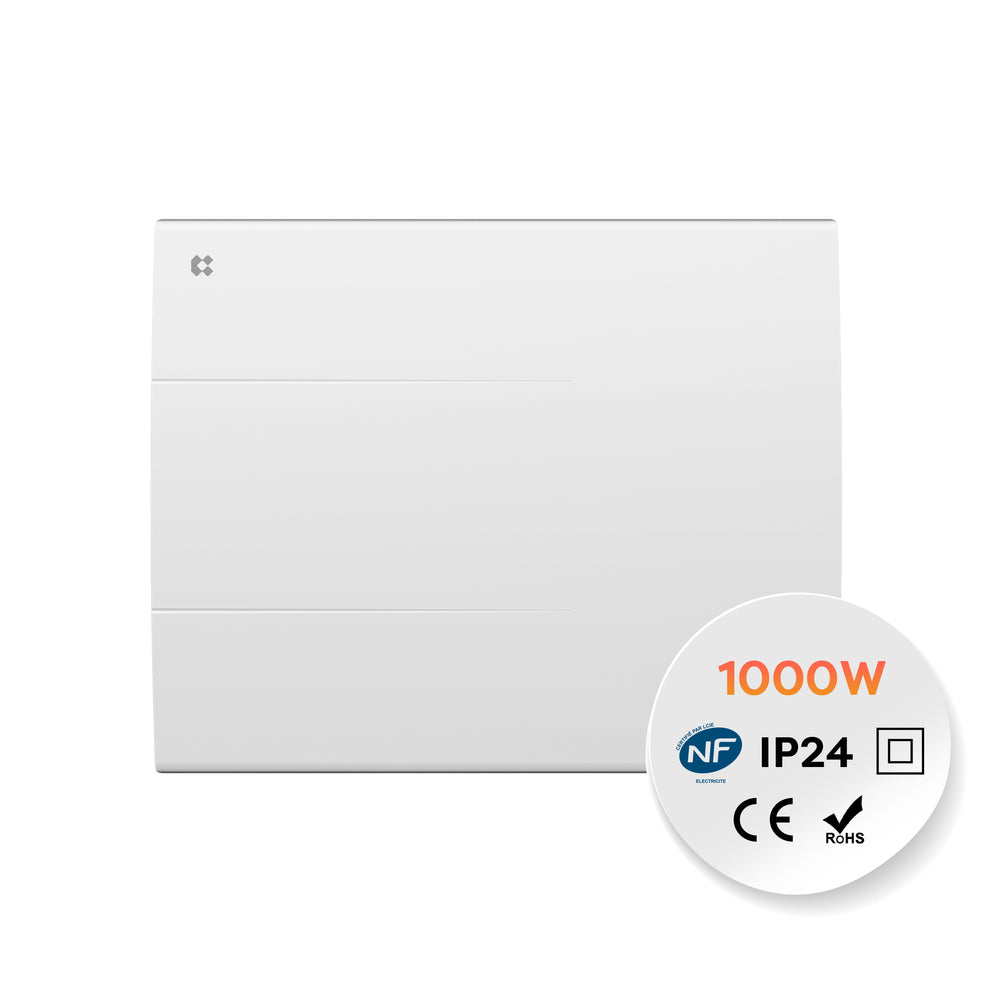
CIARRA 230V Electric Wall Heater Ceramic Electric Radiator (1000W / 1500W / 2000W)
Designed for users who prefer simple, ultra-reliable operation without complex smartphone app setups. Features a 100% pure ceramic core delivering gentle, lasting thermal inertia warmth.

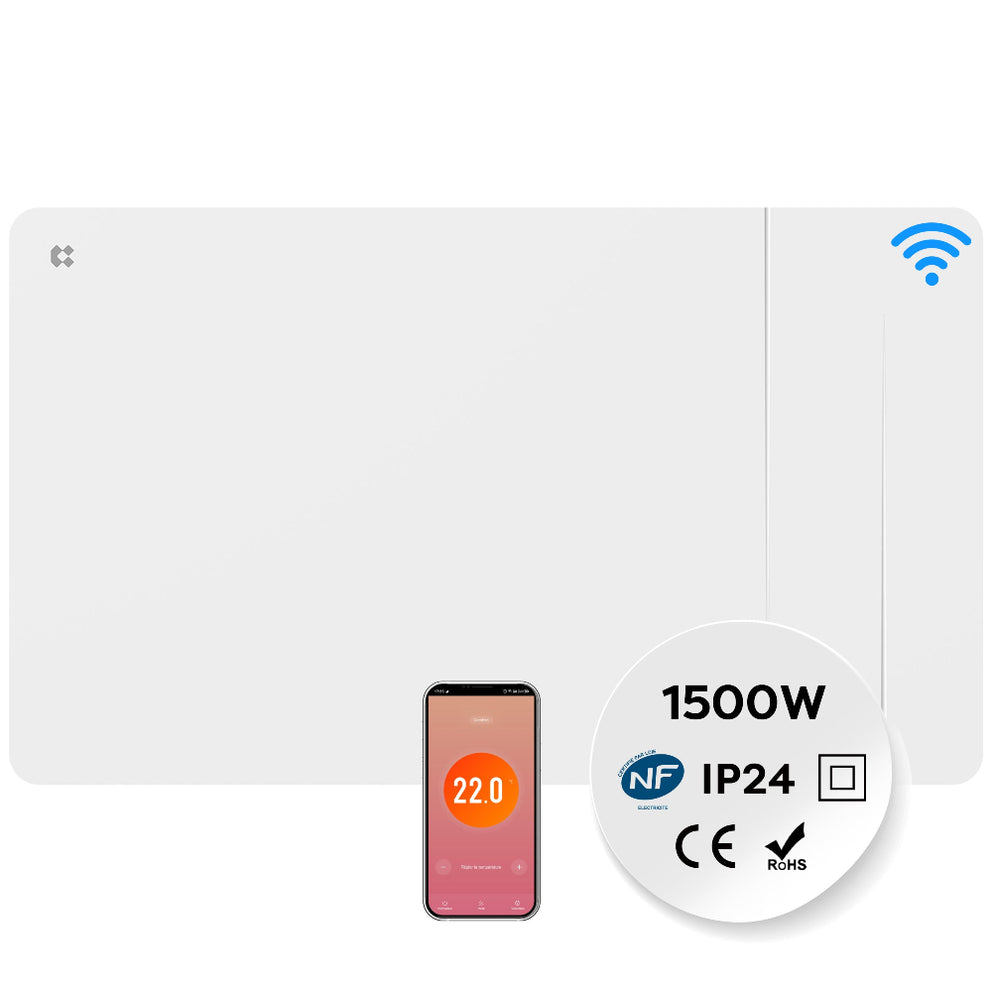
CIARRA 230V WiFi Electric Wall Heater Smart Ceramic Radiator (1000W / 1500W / 2000W)
The ultimate heating upgrade for smart homes. Features dual-core heating (ceramic + aluminum) with mobile app control, letting you pre-heat your room on your evening commute.

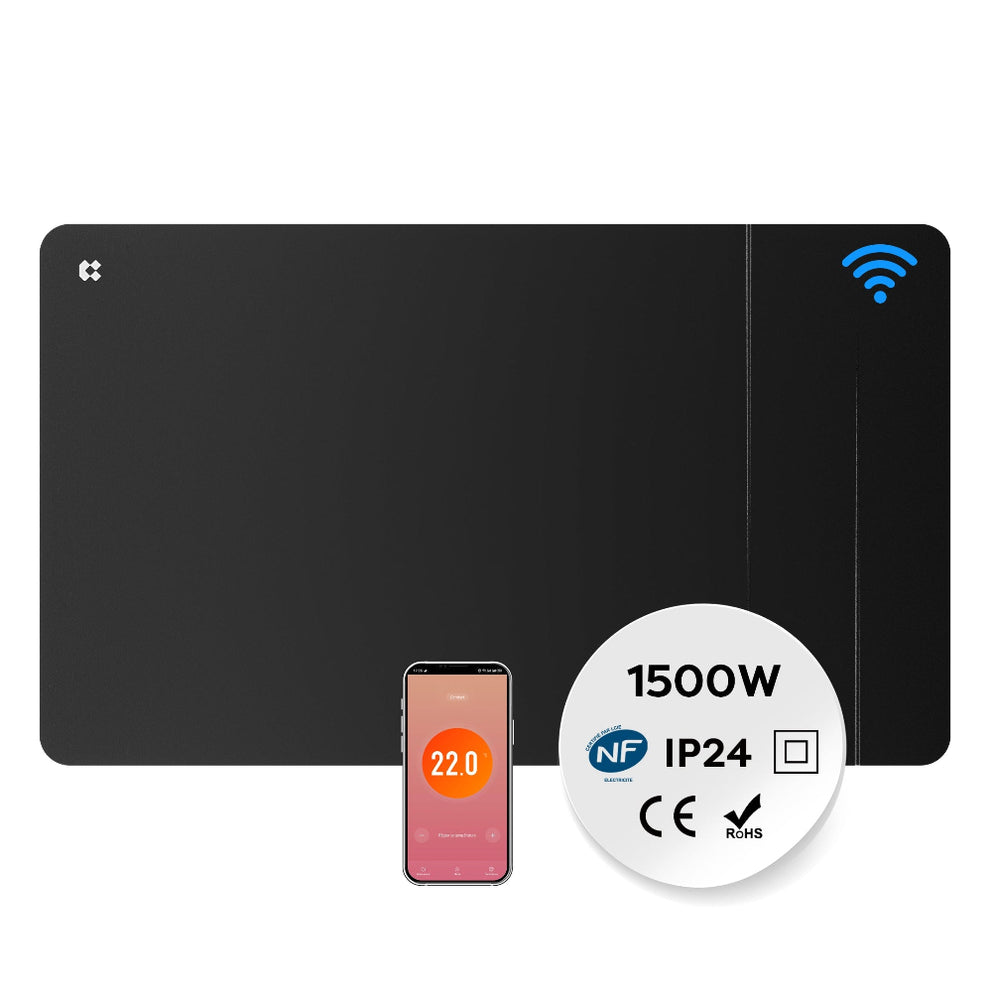
CIARRA 230V WiFi Electric Wall Heater Ceramic Electric Radiator - Matte Black (1500W)
Blends high-performance 1500W dual-core ceramic heating with a sleek matte black finish designed to elevate modern, industrial, and minimalist interior spaces.
FAQs
Can Electric Wall Heaters Heat an Entire House?
A single electric wall heater is generally designed for one room or a specific zone, rather than an entire house.
For a home with several rooms, you would typically need multiple heating points.
Are Smart Electric Wall Heaters More Energy Efficient?
A smart electric wall heater does not necessarily convert electricity into heat more efficiently than a conventional resistance heater.
Its advantage is better control.
Smart functions can help prevent heating when nobody is home, or a room is already warm, or a window has been left open, or the room is outside its normal schedule
Therefore, the energy-saving benefit generally comes from reducing unnecessary operating time, rather than from fundamentally changing the efficiency of electric resistance heating.
Can I Leave an Electric Wall Heater on Overnight?
Only if the heater is designed and rated for continuous or unattended operation and the manufacturer's instructions permit it. Use the thermostat and appropriate safety features rather than leaving a heater running unnecessarily at maximum power.
Are Electric Wall Heaters Suitable for Bathrooms?
Some are, but only models specifically designed and approved for bathroom use should be installed there. Check the IP rating, installation zones, and local electrical requirements.
Final Verdict: Is an Electric Wall Heater Right for Your Home?
An electric wall heater can be an excellent solution when you need simple, targeted heating without installing a full central heating system.
For European homes, wall mounted panel heaters, wall-mounted convection heaters, slimline electric wall heaters, plug-in electric wall heaters, and smart electric heaters offer different combinations of installation flexibility, comfort, appearance, and control.
The most important factors are not simply the heater's wattage or marketing claims. Consider:
- Room size
- Insulation
- Required heating power
- Thermostat accuracy
- Operating schedule
- Electricity price
- Installation requirements
- Bathroom safety requirements
- Smart controls
- Your home's overall heating system
For a single room, a correctly sized and well-controlled electric wall heater can provide convenient and efficient point-of-use heating. For an entire home, however, it is worth comparing the total running cost with other heating technologies, particularly heat pumps and existing central-heating systems.
News

Sustaining Quality, Elevating Kitchens: The CIARRA Story So Far

From IFA to KBIS: Ciarra’s Global Expansion and 8-Year Milestone