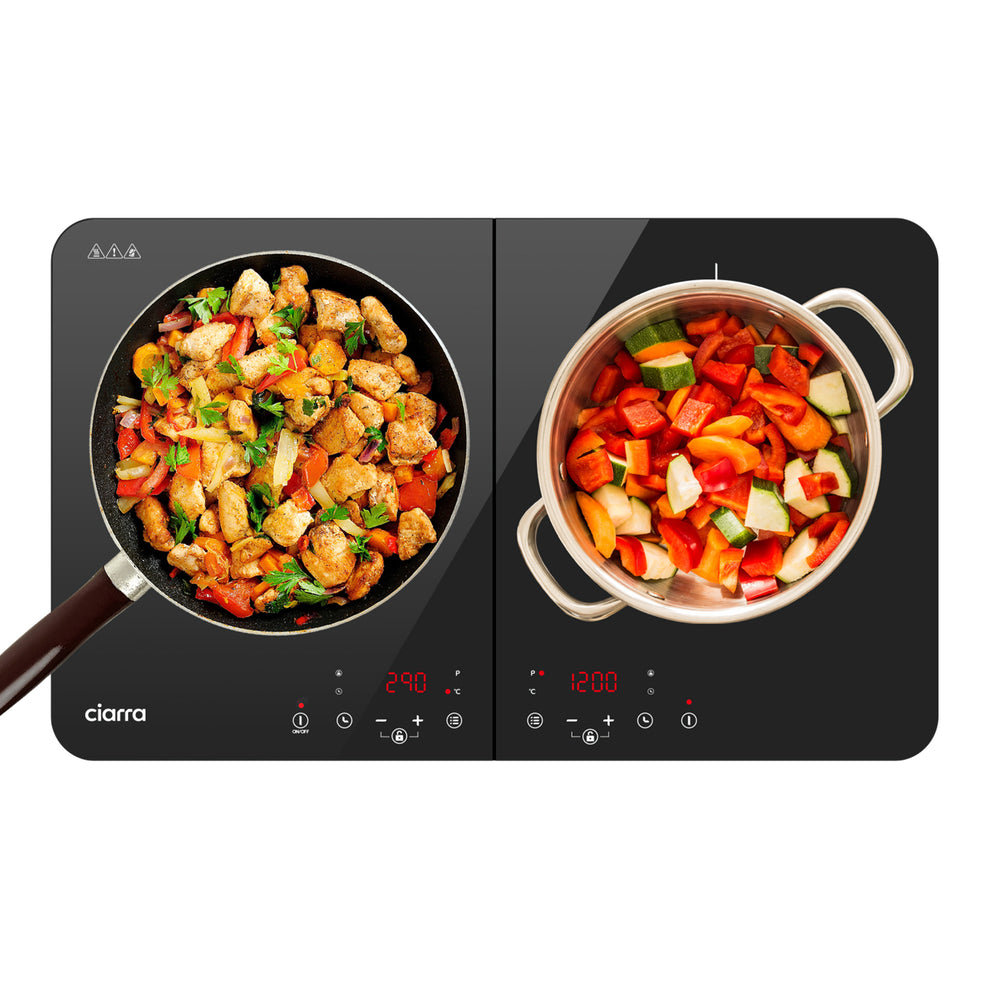
More campers across the UK and Europe are swapping traditional gas canisters for electric alternatives. With rising propane costs, strict open-fire regulations at eco-conscious campsites, and the sheer convenience of pre-paid pitch electricity, switching to a portable camping stove electric setup is a smart, forward-thinking move. Whether you are parking a campervan in the Scottish Highlands or booking a serviced pitch in the South of France, going electric offers a reliable, windproof, and highly controllable cooking experience.

Why Choose an Induction Hob for Camping?
Induction hobs use electromagnetic fields to heat cookware directly. Unlike gas or electric stoves, heat is generated in the pot or pan itself, offering faster cooking, precise temperature control, and a clean, smoke-free experience. For European and UK campers, these features are particularly attractive given strict fire regulations, unpredictable weather, and increasing interest in sustainable travel.
Here is exactly why induction is a superior choice for camping, backed by real-world performance metrics.
Induction Versus Propane, in Numbers and in the Real World
1. High Efficiency That Defies the Numbers
On paper, a high-end propane camp stove looks vastly more powerful than a portable induction hob. For example, a heavy-duty gas burner producing 20000 BTUs sounds unbeatable compared to a standard 1800-watt induction cooktop, which mathematically converts to just about 6100 BTUs (Watts × 3.41 = BTU equivalent).
However, raw numbers don't tell the full story outdoors. In a head-to-head real-world test boiling 4 cups (approx. 1 litre) of cold water in an open pot, both the gas stove and the induction hob tied perfectly, reaching a roiling boil in exactly 4 minutes and 40 seconds.
How does a lower-wattage induction unit match a high-BTU gas burner? Thermal efficiency. Gas stoves lose a massive amount of heat to the surrounding air, whereas induction transfers 100% of its energy directly into the magnetic cookware.
2. 100% Immune to Wind and Weather
If you have ever tried to cook on a windy campsite in Cornwall or the coastal regions of Brittany, you know how frustrating gas burners can be. Wind blows the flame away from the pan, drastically increasing your boiling times or blowing the flame out entirely.Because induction relies on magnetic fields rather than combustion, it is completely immune to wind, drafts, and elevation changes. No matter how hard the gale blows outside your tent or awning, your cooktop transfers heat with total consistency.
3. Precise Temperature Control for Better Cooking
Simmering a delicate sauce or keeping a stew on low heat is notoriously difficult on gas camping stoves, which are prone to flickering out or creating localized hotspots that burn your food.
Induction eliminates this guesswork. It provides flawless consistency at lower heat levels. When you select a heat setting, it sets and holds that precise temperature with zero fluctuation, giving you predictable, domestic-grade cooking results in the middle of nature.
Benefits of Using an Electric Camping Stove
For UK and European campers, investing in a portable induction camping stove brings a level of efficiency, safety, and modern convenience that traditional gas or charcoal setups simply cannot match.
Whether you are looking to maximize your campsite electric hook-up (EHU) or streamline your packing, here are the main real-world benefits:
1. Efficiency and Speed
Induction cooking eliminates the wasted ambient heat common with gas burners. By using magnetic fields to generate heat directly within your pots and pans, energy transfer is immediate. This direct heat transfer results in faster cooking times, allowing you to save valuable time and energy. Water boils in minutes, letting you prepare meals or morning coffee quickly—a massive relief when feeding hungry children after a long day of travel.
In coastal or exposed European camping spots (like Cornwall or the Dutch coast), gas flames flicker and lose heat to the surrounding air. Induction is completely unaffected by wind, keeping your cooking times fast and energy consumption low.
2. Safety
Safety is paramount in tight camping quarters like tents, awnings, and campervans. Induction technology excels by removing the most common hazards of outdoor cooking:
Cool-to-the-Touch Surface: Because the cooktop itself does not generate heat (only the cookware does), the glass surface remains safe to touch shortly after removing a pan. This significantly reduces the risk of accidental burns for children or pets.
Smart Built-In Protections: Quality units feature automatic pan detection (shutting off if no pan is present), overheat protection, and safety timers. If a pan is left unattended or reaches abnormal temperatures, the system automatically cuts the power.
Some models even offer Wi-Fi connectivity, allowing you to turn off the cooktop remotely for added peace of mind.
3. Clean, Safe, and Smoke-Free Indoor Cooking
Unlike propane or butane stoves that release methane, benzene, and carbon monoxide, electric induction produces zero chemical emissions, volatile organic compounds (VOCs), or smoke.
With induction, you eliminate the risk of exposure to unhealthy levels of carbon monoxide and the potential for gas leaks, explosions, or fires that, albeit rare, could occur with gas-based cooking setups.

As we all know, in Australia fire-bans are a very real possibility. The risk a flame or spark from a BBQ or gas-burner can inadvertently lead to a catastrophic bush fire isn't as slim as it might seem, and so fire-bans are often enforced to avoid any potential danger. This includes a strict ban on traditional camp fires, but also any kind of outdoor gas cooker. Failure to comply can lead to massive fines, and even jail time.
Thanks to induction cooktops, this is a worry you won't have. Induction stoves are safe to use during fire bans, as they don't generate any form of spark or flame.
This is especially valuable in fire-free zones or indoor areas where maintaining a clean and smoke-free environment is essential.
4. Precision Temperature Control
From simmering a delicate sauce to searing a steak, induction offers immediate, highly predictable temperature adjustments. The digital settings eliminate the guesswork of adjusting a gas dial, ensuring your food cooks evenly without burning or sticking to the bottom of the pan.

Whether you're looking to cook-up the next Michelin-Chef style bush cuisine to wow your friends and family, or just fancy yourself a bit of a gourmet foodie and enjoy a little more perfection in your cooking, an induction stove will be a massive help.
5. Highly Portable and Space-Saving
Ditching heavy gas canisters opens up valuable storage space and reduces your overall travel payload. Induction stoves are light and take up minimal space. A single plate cooktop will usually weigh anywhere between 1-2kg at most, while a 2-plate stove will usually come in around 5kg.
Their physical footprint is also small. Most induction cooktops are thin, with a simple glass panel running along the top and a couple of touch-buttons. There's no knobs or dials that stick out, and no grills, wind breaks or barriers you need to worry about either. Compare that with your average gas cooker and you quickly realise just how compact these cooktops are.
6. Effortless Cleanup
Campsite washing-up facilities can be a chore. Because the glass-ceramic surface of an induction stove stays relatively cool, spilled food and splatters do not bake or burn onto the cooktop. After cooking, a quick wipe down with a damp cloth or sponge and a bit of dish soap is all it takes to keep the unit spotless.

Cons of Using an Induction Hob when Camping
While it might seem like using an induction cooktop while camping is a no-brainer, they do come with a number of drawbacks. Their power requirements can be heavy going, they're generally quite fragile and can be prone to being broken, or at least badly scratched, and they have a compatibility requirement when it comes to cookware that can be used on them.
Like anything though, there are always pros and cons, and it just requires a little bit of research to understand whether or not the negatives outweigh the positives in your particular situation.
Let's dig in.
1. Absolute Dependency on a Heavy Power Source
Unlike a simple gas burner that operates anywhere with a standard canister, an induction hob relies entirely on a high-output electrical supply.
The Campsite EHU Reliance: The easiest way to use your hob is by plugging directly into a serviced pitch with
an Electric Hook-Up (EHU). If you prefer wild camping or unpowered pitches, your hob becomes unusable without a substantial alternative power system.
Heavy Off-Grid Power Setup: Because induction hobs typically pull between 1,200W and 2,000W, running one off-grid requires heavy-duty equipment.
You will need a high-capacity portable power station (solar generator) or a large leisure battery paired with a pure sine wave inverter capable of handling continuous discharge rates of 2,000W around 160A. To keep this setup running over multiple days, you must also invest in high-wattage solar panels or a portable inverter generator.
2. Strict Cookware Compatibility Requirements
Induction technology relies on magnetic fields to generate heat. This means you cannot just use any lightweight camping pot you have lying around.
Your cookware must have a magnetic base made of cast iron, enameled iron, or induction-ready stainless steel.
Before heading out, you must check your pans. If a standard fridge magnet sticks firmly to the flat underside of the pot, it will work on your induction hob.
3. Surface Fragility and Scratching
Traditional gas stoves feature rugged steel or cast-iron grates built to withstand heavy pots, rough handling, and the bumpy vibrations of transport. Induction hobs, by contrast, are sleek electronic appliances.
The top cooking panel is made of polished glass or ceramic. It can easily crack if a heavy cast-iron skillet is dropped on it, and it can be badly scratched by rough pan bases or grit from the campsite.
To ensure the longevity of your induction cooktop, it's crucial to exercise caution during transportation, storage, and use. Properly secure the cooktop to prevent it from shifting or banging against other objects in the back of your ute or camper.

Also, avoid storing heavy objects on top of the cooktop, which could damage the surface. Treating your induction cooktop with care can minimize the risk of accidental breakage or damage during your camping adventures.
It's worth noting that the fragility of induction cooktops can vary depending on the quality and build of the specific model. Cheaper models may have less durable materials, making them more susceptible to damage.
The weight of the cooktop can have implications for portability, especially for minimalist campers who prioritise lightweight gear. Portable induction cooktops typically range from 2kg to 5kg, with lighter options commonly found in more affordable models.
While a heavier cooktop can be seen as a negative, it can also be seen to include more robust internal parts and be a little more hardy against the perils or camping. Something worth considering before you make your investment.
How to Use an Induction Cooktop for Camping
The first step in setting up your induction cooktop for camping is ensuring you have a reliable power source. While some campsites have access to electricity, others do not. Selecting a camping location with an electric hook-up (EHU) is highly recommended. This provides the most convenient, plug-and-play experience, allowing you to run your stove consistently just like you would at home.
However, if you want the freedom to camp away from standard grid connections, you have to solve a major technical challenge: How do you power a high-wattage induction stove off-grid?
How Do You Power Induction?
Induction cooktops require a massive amount of energy, usually starting around 1,200W and maxing out near 2000W. To run this equipment without a standard campsite plug, you need a dedicated portable power ecosystem.

1. The Core: A Heavy-Duty Lithium Power Station (Solar Generator)
Standard phone power banks cannot run a stove. You need a large portable power station equipped with a high-output Pure Sine Wave Inverter.The Requirement: The built-in inverter must be rated for at least 2,000W of continuous discharge to handle the stove's peak power demands safely.
2. The Support: High-Wattage Solar Panels
Because an induction stove drains batteries rapidly, you must replenish that power during the day. Pairing your power station with 200W to 400W of portable solar panels allows you to harvest free energy from the sun, keeping your cooking setup sustainable for multi-day trips.
3. The Backup: Portable Inverter Generators
If the weather turns gray and solar charging fails, a compact, fuel-powered inverter generator is the ultimate backup. These units run on petrol or propane and generate stable, clean electricity capable of powering your induction hob directly while simultaneously recharging your battery systems.
Pro-Tip for Managing Power Limits
Whether you are plugged into a restricted 6A or 10A European campsite EHU or running off a portable battery, you rarely need to cook at maximum power. By keeping your induction stove on lower heat settings (e.g., levels 3 to 6 instead of 9), you drastically reduce the wattage draw. This simple adjustment prevents you from tripping the campsite circuit breaker or draining your off-grid battery prematurely, giving you plenty of time to cook your meals.
Recommended Electric Camping Stoves: Top Product Picks
When choosing an induction cooktop for camping, technical specifications like wattage, voltage, and weight are your primary deciding factors to ensure compatibility with campsite power grids.
Below are two premium, highly efficient options from CIARRA tailored specifically to meet these camping demands.
CIARRA Portable 2-Burner Induction Cooktop (Model: CBTIH2-OW)
If you are traveling with family or a group and need to cook multiple dishes at once, this ultra-thin double induction hob offers household-grade cooking capacity in a highly streamlined format.

Critical Power & Weight Metrics
Total Power & Smart Distribution
Features a maximum power rating of 3500W. It contains two independent 2000W cooking zones with 9 power levels (ranging from 200W to 2000W). When both zones are running simultaneously, the system intelligently manages power distribution to optimize heating.
Voltage & Fuse Rating
Operates on standard European 220–240V / 50–60Hz and requires a 16 Amp fuse rating.
Important Campsite Note:
This unit is perfect for premium, fully serviced European pitches offering 16A electric hook-ups (EHUs).
If you are on a restricted 6A or 10A pitch, you can still easily use this cooktop by manually adjusting the power levels down to lower settings (for example 600W–1000W) to prevent tripping the circuit breaker.
Weight & Dimensions
Weighs 4.94 kg and measures 605 × 370 × 45 mm.
At just 4.5 cm thick, it packs completely flat, making it easy to slide into campervan lockers or your car boot.
Key Selling Points & Safety Features
High-Quality Durable Surface
Unlike cheap, fragile alternatives, this premium glass-ceramic material is specifically engineered to withstand high thermal shock and temperatures without cracking or warping.
It resists minor transport scratches and makes clean-up effortless since spills won't bake onto the surface.
Advanced Safety Features
- Child Safety Lock
- Stop Lock
- Automatic Pan Detection
The hob automatically cuts power 60 seconds after a pan is lifted, preventing accidental operation around children or pets.
Cooking Versatility
Features:
- Sensitive sensor touch controls
- 3-hour digital timer (0–99 minutes adjustable)
- Compatible with magnetic cookware diameters from 12 cm to 28 cm

Plug-in Portable 2 Burner Induction Cooktop
Ciarra CBTIH2-OW
Efficient 3500W double induction hob with durable glass and 16A plug, perfect for family camping on serviced pitches.
CIARRA Donut Portable Single Induction Hob
For campervans, solo travelers, couples, or anyone looking to save maximum space and weight, the Donut (Midnight Dream finish) features an ingenious, sleek circular design that looks great and packs anywhere.

Critical Power & Weight Metrics
Power Output
Delivers up to 2000W of pure electromagnetic power across:
- 8 power levels
- 8 temperature ranges
This allows for fast boiling and precise simmering.
Voltage & Campsite Friendliness
Operates on standard 220–240V / 50Hz.
Drawing a maximum of roughly 8.7 Amps at full power, it is highly compatible with standard 10A and 16A campsite EHUs, making it much less restrictive than double-burner setups.
Weight & Dimensions
- An ultra-lightweight option weighing just 2.5 kg.
Compact dimensions:
- 300 × 300 × 76 mm
Its smooth, rounded edges eliminate sharp corners, making it perfect to pack tightly into small camping bins or RV cupboards.
Key Selling Points & Safety Features
Multi-Tiered Safety Systems
- Residual Heat Indicator (warns you when the surface is still cooling)
- Overheat Protection
- Overflow Protection (shuts off if a pot boils over onto the controls)
- Child Safety Lock
- Automatic Safety Switch-off
Waterproof & Quiet Operation
Features a rugged waterproof design to handle outdoor moisture or accidental kitchen spills.
Furthermore, it operates smoothly with minimal cooling fan noise, preserving the quiet peace of your campsite.
Convenient Control
Outfitted with:
Easy-to-use touch control panel
Extended 4-hour digital timer (0 to 240 minutes)
Compatible with magnetic cookware sizes ranging from 12 cm to 24 cm.

Portable Single Induction Hob
CIARRA Donut
Lightweight 2000W single induction stove featuring durable ceramic glass and robust safety controls, ideal for compact campervan cooking.
Conclusion
For European and UK camping enthusiasts, an electric induction cooktop offers speed, safety, and eco-friendliness while enabling gourmet meals in the wild. It is particularly suitable for car camping, RV adventures, and overlanding where a reliable power source is available.
While careful planning is required for power supply and cookware, the convenience, precision, and clean cooking experience make induction cooking a compelling alternative to traditional gas stoves.
Whether you’re brewing morning coffee by a Scottish loch, simmering a stew in the Lake District, or preparing a gourmet meal in Provence, an induction camping stove can elevate your outdoor culinary experience—without the mess, smoke, or safety concerns of open flames.
News

Sustaining Quality, Elevating Kitchens: The CIARRA Story So Far

From IFA to KBIS: Ciarra’s Global Expansion and 8-Year Milestone