As modern kitchen design continues to evolve across the UK and Europe, induction hobs with integrated downdraft extractors have become one of the most sought-after kitchen appliances. They offer a sleek, minimalist appearance, eliminate the need for a traditional overhead cooker hood, and are particularly popular in open-plan homes and kitchen islands.
However, many homeowners still have questions before investing in one:
- Do downdraft extractors actually work?
- Can they remove steam and cooking odours effectively?
- Are they noisier than traditional cooker hoods?
- What happens if food or liquid falls into the extractor?
- Are recirculating models good enough?
- Which brands offer the best performance?
Based on real experiences from homeowners, installers, and kitchen professionals, here's what you need to know before choosing an induction hob with a built-in extractor.
How Can a Downdraft Extractor Pull Steam Down When Steam Naturally Rises?
This is probably the most common question people ask when they first encounter a venting hob.
After all, cooking vapour, steam, and grease naturally rise upwards. So how can an extractor positioned beside the pan pull everything down?
The answer lies in airflow engineering.
High-quality downdraft extractors generate a powerful horizontal airflow directly beside the cooking zone. Because the extractor intake is located very close to the source of the steam, many cooking fumes are captured before they have a chance to rise significantly.
During everyday cooking tasks such as boiling pasta, frying eggs, cooking fish, or searing steaks, premium venting hobs can be surprisingly effective.
However, physics still matters.
For large stockpots, heavy frying, wok cooking, or high-heat cooking that produces large volumes of steam and grease, a traditional overhead cooker hood remains the more efficient extraction method. Since overhead hoods work with the natural upward movement of cooking vapours, they generally require less airflow to achieve similar extraction performance.
For most European households, though, a quality downdraft system provides more than enough extraction for everyday cooking.
Why Quality Matters More with Downdraft Extraction
Unlike traditional cooker hoods, downdraft extractors rely heavily on fan performance and airflow design.
A weak extractor may struggle to capture steam effectively because it must overcome the natural tendency of hot air to rise.
This is why homeowners and installers often recommend investing in a premium brand rather than choosing the cheapest available option.
Many users report that premium models maintain strong extraction even when frying meat or cooking multiple dishes simultaneously.
The general consensus is simple: when it comes to downdraft extraction, airflow performance is worth paying for.
Why Many European Homes Use Recirculating Systems
Across Europe and the UK, many homeowners are limited to recirculating extraction systems due to building regulations or property design.
This is particularly common in:
- Apartments
- Passive houses
- Energy-efficient homes
- New-build developments
In these situations, activated carbon filters are used to reduce cooking odours before air is returned to the kitchen.
While recirculating systems may not eliminate every cooking smell, many users report excellent results from high-quality systems offered by brands such as IKEA.
For households that cannot install external ducting, a premium recirculating system can still provide a very satisfying cooking experience.
How to Choose a High-Quality Downdraft Extractor (What Really Matters When Buying)
While brand reputation is a useful starting point, the real difference between a good and poor downdraft extractor comes down to a few key performance factors. If you want to choose a high-quality model, focus less on marketing claims and more on the specifications that directly affect real cooking performance.
1. Airflow Capacity (m³/h) — The Most Important Starting Point
Airflow is the first metric to check, as it indicates how much air the extractor can move.
As a general guide:
- 500–650 m³/h: suitable for standard cooking
- 650–800+ m³/h: better for open-plan kitchens or heavier use
However, airflow alone is not enough—it must be paired with strong system design to be effective in real conditions.
2. Static Pressure (Pa) — The Most Overlooked but Critical Factor
If there is one specification that separates premium from average downdraft systems, it is static pressure.
This determines how well the extractor can maintain performance when:
- Air passes through filters
- Long ducting is installed
- Air is pulled sideways instead of rising naturally
A high airflow rating without strong static pressure often results in disappointing real-world performance. For downdraft systems, this is arguably the most important technical indicator.
3. Ducted vs Recirculating Efficiency
Always check how performance changes depending on installation type.
Ducted (external venting): stronger, more consistent extraction
Recirculating (carbon filter): more flexible, but depends heavily on filter quality
If you must use recirculation (common in UK/EU apartments), filtration system quality becomes a key decision factor.
Basic carbon filters mainly reduce odours, but they do not fully remove ultra-fine particles or bacteria-sized contaminants. Over time, performance also declines as the filter becomes saturated.
This is why filter quality and technology matter more in recirculating systems than many buyers realise.
Carbon Filters (Standard Solution)
Most downdraft systems use activated carbon filters, which:
absorb cooking odours
reduce grease particles in the air
require periodic replacement or regeneration
However, they have limitations:
effectiveness decreases over time
cannot fully eliminate microscopic pollutants
require ongoing maintenance costs
Plasma Filtration (Advanced Air Cleaning Technology)
A small number of premium systems now use plasma-based filtration technology, which goes beyond traditional carbon filters.
Instead of only absorbing odours, plasma systems work by:
breaking down odour molecules at a molecular level
neutralising bacteria, smoke particles, and organic compounds
reducing airborne contaminants more effectively than standard filters
Some systems also combine:
- high-voltage ionisation
- UV-based sterilisation
- catalytic filtration stages
This multi-stage process can significantly improve indoor air quality, especially in recirculating setups where no external venting is possible.
However, it is important to note:
plasma systems are not yet common across all brands
they are typically found in higher-end or specialised models
If you are using a recirculating downdraft system, the most important factor is not just having a carbon filter, but the level of filtration technology behind it.
4. Filtration & Maintenance Design
A high-quality system should make maintenance simple:
Dishwasher-safe grease filters
Easy-access collection trays
Long-life or regenerable carbon filters
Poor maintenance design often becomes the biggest long-term frustration for users.
5. Flex Zones Are Becoming a Must-Have Feature
One feature increasingly requested by European consumers is a flexible cooking zone.
Often called:
- Flex Zone
- Bridge Zone
- Combi Zone
These features allow multiple cooking areas to operate as one larger zone.

This is particularly useful for:
- Griddle plates
- Teppanyaki cooking
- Large roasting pans
- Oversized cookware
Some homeowners have expressed disappointment when premium-priced models lacked this capability.
For many buyers, bridge functionality has become a key purchasing criterion.
Pros and Cons of Venting Hobs
One of the biggest reasons homeowners choose a hob with integrated extraction is kitchen design.
Traditional extractor hoods can interrupt sightlines and become a dominant visual feature in an otherwise clean, contemporary kitchen.
This is especially true in open-plan living spaces where homeowners want unobstructed views across the room.
For island installations, a downdraft extractor offers several advantages:
- Cleaner visual appearance
- Open sightlines throughout the room
- More natural interaction with family and guests
- Modern architectural aesthetic
- No need for large hanging cooker hoods
For many homeowners designing a luxury kitchen island, a venting hob is often considered the most elegant solution available.
Another key consideration is installation complexity and cost. Traditional ducted extractor systems often require extensive ducting work, structural modifications, and professional installation, which can significantly increase both time and overall expense. In contrast, a venting hob offers a more streamlined installation process, helping homeowners reduce installation costs and avoid complex ventilation pipework.

The Biggest Drawback: Loss of Storage Space
Almost every homeowner who owns a venting hob mentions this issue.
The extractor motor, ductwork, and filtration system are typically installed underneath the hob, occupying valuable cabinet space that would otherwise be used for storage.
This can reduce:
- Drawer capacity
- Pot and pan storage
- Overall cabinet usability
In larger kitchens this may not be a concern, but in smaller apartments and compact kitchens it can become a significant design consideration.
Before purchasing, it's worth asking your kitchen designer exactly how much storage space will be lost beneath the appliance.
Related: Pros and Cons of Venting Hob
Another Disadvantage of a Venting Hood is Installation Is More Complex Than a Standard Cooker Hood
Installing a venting hob is often more complicated than homeowners initially expect.
Unlike a traditional wall-mounted cooker hood, a downdraft extractor requires careful planning for airflow routing.
For ducted installations, considerations may include:
- Under-floor duct routing
- Ducting through cabinetry
- Airtight connections
- Condensation prevention
- Thermal insulation in cold spaces
Installers frequently recommend using rigid ducting rather than flexible ducting wherever possible, as it improves airflow efficiency and reduces noise.
A properly designed installation can make a significant difference to overall performance.
You might be interested in:
- Induction Hob with Extractor Installation and User Guide
- 2026 The Best Induction Hob with Integrated Extractor

What Happens If Food or Liquid Falls Into the Extractor?
Another common concern is accidental spills.
Homeowners often ask:
- What happens if soup boils over?
- What if oil splashes into the vent?
- Will food particles damage the extractor?
Fortunately, most modern venting hobs are designed with these situations in mind.
Many models include:
- Grease filters
- Liquid collection trays
- Overflow protection systems
- Easily removable components
Small spills are generally not a problem and can be cleaned during routine maintenance.
However, some users remain concerned about long-term grease build-up inside the extraction system, particularly if maintenance is neglected.
Shop the Best Downdraft Hob CIARRA ONE
CIARRA ONE Compact 390mm Induction Venting Hob (CBBEH392B-OW)
Designed for small kitchens, studio apartments, and compact layouts, this 390mm model delivers full downdraft functionality in a space-saving format—while still covering the key performance factors that matter most when choosing a high-quality extractor hob.

This model is designed with the same core principles recommended when selecting a premium downdraft system:
Airflow capacity: up to 350 m³/h, suitable for everyday cooking in small kitchens
Compact but efficient extraction design: captures steam directly at source
Low maintenance system: integrated filtration reduces long-term servicing needs
Advanced Plasma⁺ Filtration System (Key Differentiator)
Unlike standard carbon-only recirculating systems, this model features a Plasma⁺ purification system, which significantly improves air quality in small enclosed kitchens.
It works by:
- breaking down odours at molecular level
- neutralising smoke particles and bacteria
- reducing reliance on frequent filter replacement
For compact homes where recirculating extraction is often required, this is a major advantage compared to basic carbon filters.
- Cooking Performance & Flexibility
- 2 induction zones
- Up to 3200W total power
- Booster cooking for fast heating
While compact, it still maintains stable heat output suitable for everyday European cooking styles.
What Makes It a “Good Quality Choice”
In line with key downdraft buying principles, this model includes:
- balanced airflow for its size class
- advanced filtration (Plasma⁺ vs basic carbon systems)
- low-maintenance design
- integrated extraction (no external hood required)

CIARRA ONE Compact 390mm Induction Venting Hob
Ciarra CBBEH392B-OW
CIARRA ONE 390mm compact induction hob with Plasma⁺ filtration, ideal for small kitchens and space-saving cooking.
CIARRA ONE 590mm Induction Venting Hob (CBBEH594BBFF-OW)
This 59cm model is designed for standard UK/EU compact kitchens, offering a strong balance between cooking performance and extraction power while integrating all key features that define a high-quality downdraft system.
This model directly aligns with the most important selection criteria:
- Airflow capacity: up to 400 m³/h, suitable for everyday to medium-heavy cooking
- Strong system balance: designed for real-world ducted or recirculating use
- Stable performance design: better airflow consistency than entry-level systems
- Flex Zone (Key Feature for Modern Cooking)
One of the most important upgrades in this model is the inclusion of 2 Flex Zones, which directly aligns with modern European cooking habits.

Plasma⁺ Filtration System (Upgraded Air Quality)
Instead of relying only on standard carbon filtration, this model uses Plasma⁺ multi-stage air purification, which:
breaks down cooking odours more effectively
reduces bacteria and airborne particles
improves long-term performance in recirculating mode
This makes it significantly more advanced than basic downdraft systems that only rely on carbon filters.
Why This Model Performs Better in Real Kitchens
Based on key downdraft selection criteria, this model offers:
higher airflow capacity (400 m³/h)
advanced filtration system (Plasma⁺ + grease filtration)
flexible cooking zones (Flex Zone support)
better balance between power and efficiency

CIARRA ONE 590mm Induction Venting Hob
Ciarra CBBEH594BBFF-OW
CIARRA ONE 590mm induction venting hob with Flex Zones, 400m³/h airflow, and Plasma⁺ air purification system.
CIARRA ONE 830mm Full-Size Induction Venting Hob (CBBEH834BBFF-OW)
This is the flagship 83cm model, designed for large kitchens, open-plan living spaces, and kitchen island installations where both cooking performance and extraction power are critical.
It directly addresses all major downdraft purchasing criteria at a higher performance level.

This model is designed around the most important selection principles:
- Airflow capacity: up to 400 m³/h with boost performance
- Strong extraction consistency: optimised for open kitchens
- High static efficiency design: better airflow control in real installations
- Low-noise engineering: from 41 dB(A) at lower speeds
- Full Flex Zone System (Maximum Cooking Flexibility)
Unlike smaller models, this version includes a full 4-zone layout with flex functionality, allowing:
- multiple large pans simultaneously
- bridging zones for oversized cookware
- Teppanyaki plates or griddle cooking
This directly matches one of the most important modern buying trends: flexible cooking surfaces instead of fixed zones.
Advanced Filtration System (Designed for Real-World Use)
A common concern for downdraft users is grease leakage or long-term clogging. This model addresses that with:
- multi-layer grease filtration
- sealed airflow design to reduce leakage risk
- removable filters for easy cleaning
- liquid collection and protection system
This ensures stable performance even under frequent heavy cooking conditions.
Plasma⁺ Filtration (Premium Air Purification)
This model uses Plasma⁺ technology, which goes beyond traditional carbon filtration by:
breaking down odours at molecular level
neutralising bacteria and smoke particles
improving air freshness in recirculating setups
reducing long-term filter dependency
This is particularly valuable in UK/EU apartments where ducted installation is not always possible.
Why This Model Fits Premium Downdraft Requirements
According to the key selection criteria for high-quality venting hobs, this model delivers:
- strong airflow performance for large kitchens
- advanced filtration + Plasma⁺ purification
- full Flex Zone cooking capability
- low-noise operation across speed levels
- improved real-world extraction stability

CIARRA ONE 830mm Full-Size Induction Venting Hob
Ciarra CBBEH834BBFF-OW
CIARRA ONE 830mm full-size induction hob with extractor, Flex Zones, Plasma⁺ filtration, and powerful 400m³/h airflow.
CIARRA ONE Induction Venting Hob Comparison
| Feature | 390mm Compact (CBBEH392B-OW) | 590mm Standard (CBBEH594BBFF-OW) | 830mm Full Size (CBBEH834BBFF-OW) |
|---|---|---|---|
| Width | 390mm | 590mm | 830mm |
| Cooking Zones | 2 zones | 4 zones | 4 zones + flex capability |
| Total Power | Up to 3200W | Up to 7000W | Up to 7000W |
| Max Airflow | Up to 350 m³/h | Up to 400 m³/h | Up to 400 m³/h (boost performance) |
| Flex Zone | No | ✔ 2 Flex Zones | ✔ Full Flex Zone system |
| Filtration System | Plasma⁺ + grease filter | Plasma⁺ + multi-stage filtration | Plasma⁺ + advanced grease + sealed airflow system |
| Noise Level | Low–moderate | Moderate | Low (from 41 dB(A)) |
| Installation Type | Compact built-in / recirculation | Built-in (ducted or recirculating) | Built-in / island optimized |
| Space Requirement | Minimal | Standard countertop | Large countertop / island |
| Key Advantage | Ultra-compact space saving | Balanced performance + Flex Zone | Maximum power + full cooking flexibility |
Conclusion
When choosing an induction hob with integrated downdraft extraction, the most important takeaway is this: a well-known brand does not automatically guarantee better performance.
Across the UK and European market, real-world performance depends far more on technical specifications than branding alone. Two products from different brands can look similar, but deliver very different results in daily cooking.
That is why smart buyers focus on the actual engineering behind the product, especially:
- Airflow capacity (m³/h)
- Static pressure performance
- Filtration system quality (carbon vs advanced Plasma⁺ systems)
- Flex Zone cooking design
- Real installation compatibility (ducted vs recirculating)
These factors have a much bigger impact on cooking experience than brand name or marketing claims.
For many modern households in the UK and Europe—especially apartments and new-build homes where recirculating systems are required—filtration quality becomes even more important than raw extraction power.
Why CIARRA ONE Is a Strong Value Choice
The CIARRA ONE range is designed specifically for this type of real-world kitchen scenario, combining:
integrated hob + extractor design
Plasma⁺ advanced air purification system
strong airflow performance across all sizes
flexible cooking zone configurations
space-saving installation for modern kitchens
Unlike many premium-priced alternatives, it focuses on delivering balanced performance and advanced filtration technology at a more accessible price point, making it a highly competitive option for everyday use.
In short: don’t choose based on brand alone—choose based on performance. And for most recirculating kitchen setups, CIARRA ONE offers one of the most practical and cost-effective solutions available today.
News

Sustaining Quality, Elevating Kitchens: The CIARRA Story So Far
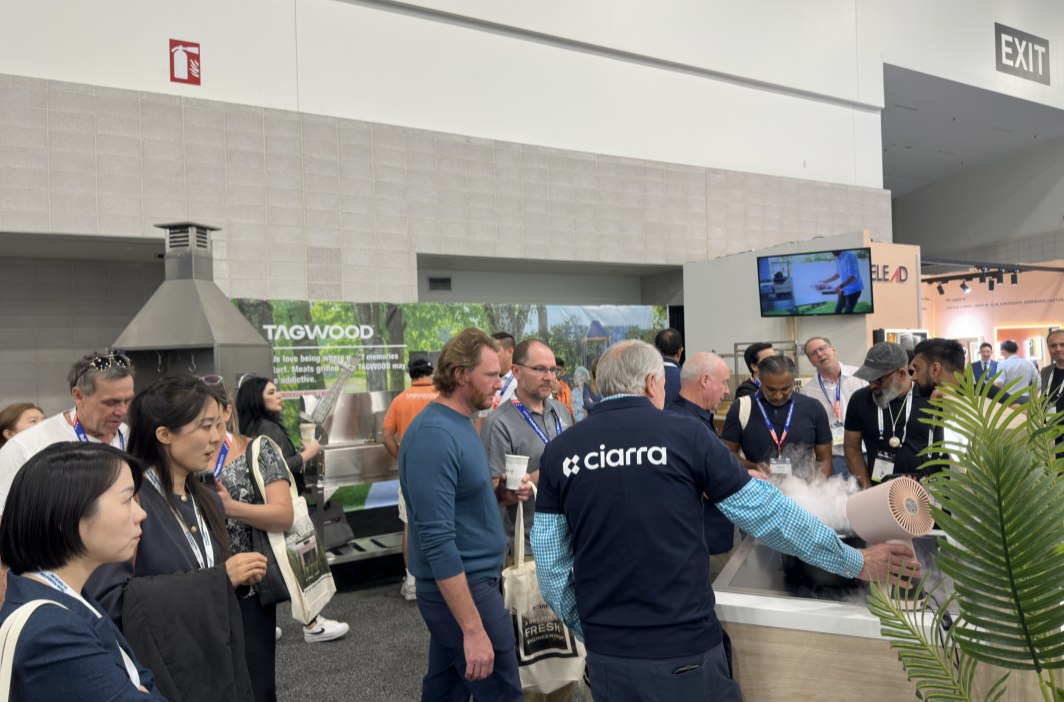
From IFA to KBIS: Ciarra’s Global Expansion and 8-Year Milestone


Commenti
Non ci sono ancora commenti.