When considering heating options for your home, safety is often a top priority. While the general term 'electric heater' covers everything from budget fan heaters to wall units, electric radiators are widely considered one of the safest, most reliable methods for long-term heating.
When choosing a heating solution for your home, safety is usually the very first consideration. Whether you are replacing old water-based radiators, supplementing central heating, or fitting an extension, electric radiators are one of the most popular options across Europe.
However, because they are high-wattage electrical appliances that run for long periods—often unattended or overnight—it is natural to ask: Are electric radiators safe?
The short answer is yes. Modern electric radiators are among the safest heating appliances available today. However, understanding how they work, how they comply with strict European safety standards, and how to operate them correctly will give you total peace of mind.
Here is a complete guide addressing the primary safety concerns, electrical requirements, and safety features of electric radiators in European homes.

Why Are Electric Radiators Safer Than Other Heating Systems?
Electric radiators are generally considered a safe heating option for UK and European homes, particularly because they do not use combustion.
-
No gas or carbon monoxide risk: They produce heat from electricity without burning fuel, eliminating risks associated with gas leaks and combustion.
-
No flue or chimney required: Electric radiators do not require combustion ventilation or a flue, making installation simpler.
-
Precise temperature control: Built-in thermostats can maintain the desired room temperature and reduce heating when it is no longer needed.
- Immediate power shut-off: When switched off, the radiator stops consuming electricity and generating additional heat.
However, like any electrical appliance, safety depends on proper installation, suitable electrical protection, and following the manufacturer’s instructions. For EU consumers, look for products with appropriate CE compliance and recognised safety testing.
Are Electric Radiators Safer Than Standard Electric Heaters?
Yes, electric radiators are significantly safer than standard electric heaters.
Here is why:
- Enclosed Elements: Radiators seal their heating elements inside liquid, ceramic, or metal casing, eliminating the fire risks posed by standard heaters with exposed, red-hot coils.
- Cooler Surface Temp: Heat is spread over a larger surface area via gentle radiation, making the outer casing much cooler and safer around children and pets.
- Safe for Overnight Use: Precise digital controls and heat-retention media allow radiators to run safely 24/7. Standard heaters are designed only for brief, supervised use and can overheat if left unattended.
- No Moving Parts: Unlike fan heaters, radiators have no motors or blowers to jam, clog with dust, or cause electrical faults.
What Safety Features Should an Electric Radiator Have?
1. Electrical Safety & Voltage Requirements in Europe and the UK
The Standard: Across the UK and European Union, the official mains power supply is 230V AC (50Hz). Certified radiators designed for this market are built to handle up to 240V–250V safely without damaging internal components or overheating.
The Risk of Non-Standard / Off-Spec Radiators: Many uncertified or imported radiators sold online are built for different regional grids (such as 100V–110V US/Japan standards, or fixed lower-tier 220V components without proper voltage tolerance). Using these non-standard appliances on a European 230V/240V supply creates severe safety hazards:
-
Overcurrent & Rapid Overheating: Plugging a lower-voltage unit into a 230V outlet forces excess current through the heating elements, causing them to heat up far beyond their designed safety limit in seconds.
-
Fire & Insulation Breakdown: Extreme thermal stress can melt internal wiring insulation, char printed circuit boards (PCBs), or ignite plastic casings.
-
Component Failure & Short Circuits: Capacitors and transformers rated below 230V will rupture or short-circuit, instantly tripping your home’s breaker panel or blowing the main fuse.
-
Voided Home Insurance: Operating non-CE/UKCA-certified appliances that do not match local voltage standards will completely void home insurance coverage in the event of an electrical fire.
Key Rule: Always verify that the rating label on the back of the radiator explicitly states "230V" or "220V–240V 50Hz" and bears a genuine CE or UKCA safety mark before plugging it in.
2. Hardwiring vs. Plug-in Installation
- Plug-in Radiators: Most portable or freestanding oil-filled and panel radiators come with a pre-moulded 230V plug. They can be plugged directly into a standard wall socket. Never use a light-duty extension cord, as high current draw (1500W–2500W) over a thin extension cable can lead to overheating and fire hazards.
- Bathroom & Fixed Installations: Radiators installed in bathrooms (such as electric towel rails) or wired as primary heating must be hardwired into a fused spur (FCU) by a qualified electrician, complying with local wiring regulations (such as BS 7671 in the UK or NFC 15-100 in France).
3. Built-in Safety Features to Look For
Unlike budget fan heaters or open-wire convection heaters, premium electric radiators incorporate multiple layers of active and passive safety mechanisms:
a. Thermal Cut-Out (Overheat Protection)
Every compliant electric radiator features an internal thermal fuse or bi-metallic thermostat. If the internal fluid or heating element reaches an abnormally high temperature (for instance, if the radiator is accidentally covered by a blanket), the power supply is automatically cut off to prevent fire risks.
b. Anti-Tilt / Topple Protection
For portable, floor-standing models with castors, an internal gyroscopic or mechanical tilt switch ensures that if the unit is knocked over by a child or pet, the electricity cuts off instantly
c. Ingress Protection (IP Ratings) for Damp Spaces
If you plan to install a radiator in a bathroom, kitchen, or utility room, check its IP (Ingress Protection) rating:
IPX4: Protects against water splashes from any direction (standard for bathroom zone 2).
IP24 / IP44: Highly recommended for safe operation in humid environments.

d. Wi-Fi Controls
Wi-Fi Connectivity and Smart Controls provide an added layer of safety through remote monitoring and control. You are able to check the status of your radiators from anywhere through your smartphone, adjusting settings or turning units off as needed.
e. Low Surface Temperature
Low surface temperature technology enables external surfaces to be warm to the touch while still giving out efficient heat output. This is particularly suitable for homes with young children or elderly people.
Can You Leave an Electric Radiator On Overnight?
Yes, modern electric radiators can generally be left on overnight when properly installed and used according to the manufacturer’s instructions.
They are designed with enclosed heating elements and thermostatic controls, which automatically reduce or stop heating once the desired temperature is reached. This makes them generally safer for overnight heating than basic fan heaters with exposed, high-temperature heating elements.
For added safety, choose a model with overheat protection and a reliable thermostat.
European Safety Standards and Certifications
When buying an electric radiator in Europe or the UK, always verify that the product carries recognized safety marks:
CE Mark & UKCA Mark: Indicates compliance with essential health, safety, and environmental protection standards within the EEA and Great Britain.
EN 60335 Compliance: The European standard for safety in household and similar electrical appliances.
Lot 20 (Ecodesign Directive): European legislation requiring all fixed electric space heaters to meet strict energy-efficiency and safety guidelines, including digital timers, open-window detection, and adaptive start control.
GS Mark (Geprüfte Sicherheit): A respected German voluntary safety certification indicating independent testing.
At Ciarra Electric Radiators, the radiators meet rigorous EU safety standards and are CE-approved. All of Ciarra radiators have these essential safety features, so you can heat your home with complete peace of mind.
Safe Operating Best Practices
To guarantee absolute safety when running your electric radiator, follow these simple guidelines:
Do Not Cover: Never drape wet clothes, towels, or laundry directly over a standard electric space radiator unless it is specifically designed as an electric towel rail. Covering vents restricts air circulation and activates the overheat cutout.
Maintain Clearance: Keep furniture, curtains, and bedding at least 30 cm away from the front and sides of the unit.
Inspect Plugs and Cables: Periodically inspect the power cord for signs of wear, pinching, or discoloration.
Avoid Adapter Plugs: Plug high-wattage units directly into dedicated wall outlets rather than multi-plug adapters.
Why Ciarra Electric Radiators are the Safest?
Fully Enclosed Heating Core (Zero Exposed Elements): Utilizes a fanless, fully sealed ceramic (or dual ceramic and aluminium) thermal inertia core, completely eliminating exposed red-hot coils to prevent dust burning, contact burn risks, and fire hazards.
- Class II Insulation & 230V Grid Compatibility: Built specifically for the standard European/UK 230V/50Hz grid with Class II double electrical insulation, preventing short circuits, electrical leakage, or voltage-overload faults during long-term continuous use.
- IP24 Splash-Proof Protection: Rated IP24 waterproof, making it completely safe for installation in humid bathrooms and damp spaces (Zone 2) without the risk of water ingress or shorting.
- Smart Overheat Protection & Open Window Cutoff: Features a built-in thermal cutoff sensor that automatically turns off power if temperatures spike abnormally, paired with Open Window Detection to prevent energy waste and unmonitored overheating.
- Fanless Silent Operation & Low Surface Risk: Delivers 100% silent, gentle heat distribution through natural radiation and thermal inertia, eliminating hot air blowers that can blow dust or cause sudden thermal spikes.
- Full European Safety Certifications: Fully certified under rigorous European safety and energy standards—including NF, CE, ErP, RED, and RoHS—offering uncompromising, peace-of-mind security for 24/7 home heating.

CIARRA WiFi Ceramic Electric Radiator (White)
Dual Ceramic & Aluminium Core | WiFi Smart App Control | IP24 Rated

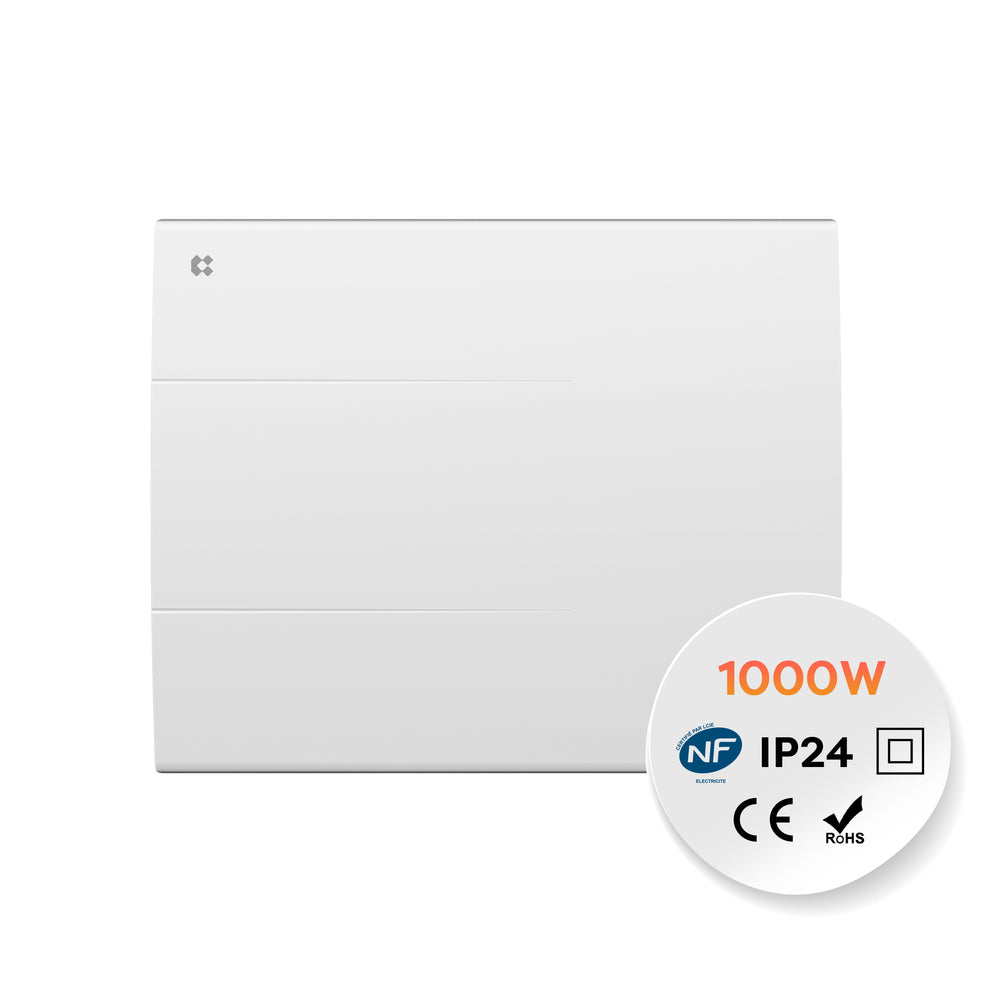
CIARRA Ceramic Electric Radiator (Non-WiFi)
100% Pure Ceramic Core | Intuitive Control | Thermal Inertia Storage

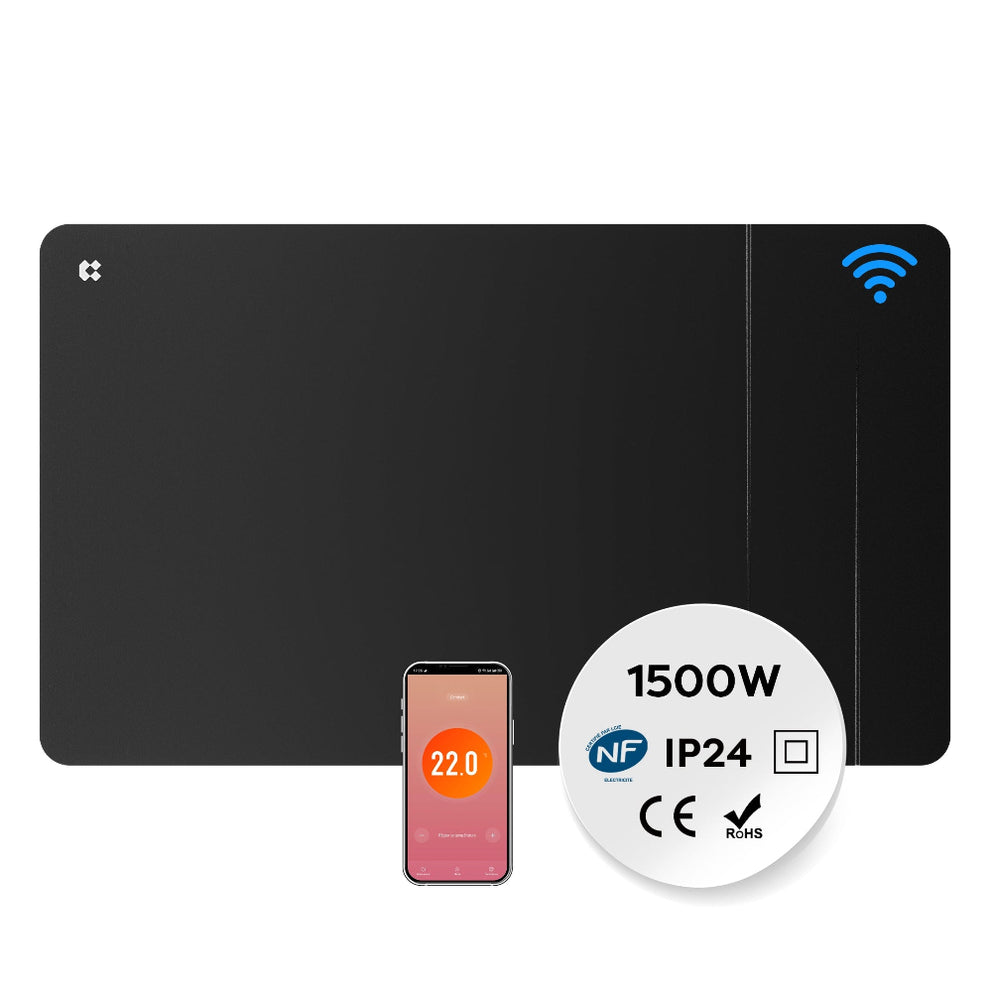
CIARRA WiFi Ceramic Electric Radiator (Black)
Dual Heating Core | Premium Black Finish | 24/7 Smart Scheduling
FAQs
How Far Should an Electric Heater Be From Furniture?
Keep an electric radiator at least 3 feet (1 meter) away from furniture, bedding, and other combustible materials. Adequate clearance prevents heat damage to furniture finishes and reduces fire hazards by allowing proper air circulation around the unit.
Can You Put an Electric Radiator Near Curtains?
No, you should never place an electric radiator directly next to or underneath hanging curtains. Curtains can block airflow, cause the unit to overheat, or come into contact with heating elements, posing a serious fire risk. Maintain a minimum distance of 3 feet (1 meter) from any drapery.
Can You Put an Electric Radiator Under a Window?
Yes, under a window is often the most efficient location for an electric radiator. Cold air descending from the window pane meets the warm air rising from the radiator, creating convection currents that distribute heat evenly throughout the room. Ensure curtains do not hang over or drape onto the heater.
Is It Safe to Leave an Electric Radiator on Overnight?
Modern electric radiators equipped with built-in thermostats, auto-shutoff mechanisms, and thermal overload protection are generally safe to run overnight. However, ensure the unit is kept well clear of blankets, bedding, and furniture, and never use portable models unmonitored in child or pet bedrooms.
Are Electric Radiators Safe in Bathrooms?
Only electric radiators specifically rated for bathroom use (with an appropriate IP moisture-resistance rating, such as IP24 or higher) are safe for bathrooms. Standard portable radiators should never be used in a bathroom due to shock and water-splash hazards. Hardwired, wall-mounted towel radiators or IP-rated electric radiators are the standard choice.
Are Electric Radiators Safe in Bedrooms?
Yes, electric radiators are very safe for bedrooms when used correctly. Opt for wall-mounted units or oil-filled radiators with tip-over switches, timers, and automatic thermostat controls. Always maintain clear space around the heater and avoid placing it too close to the bed.
Can You Use an Electric Radiator With an Extension Cord?
It is strongly recommended to plug an electric radiator directly into a dedicated wall outlet. Most extension cords or power strips are not rated to handle the continuous high wattage drawn by electric space heaters, which can cause overheating and melt the cord or trigger electrical fires.
News

Sustaining Quality, Elevating Kitchens: The CIARRA Story So Far

From IFA to KBIS: Ciarra’s Global Expansion and 8-Year Milestone