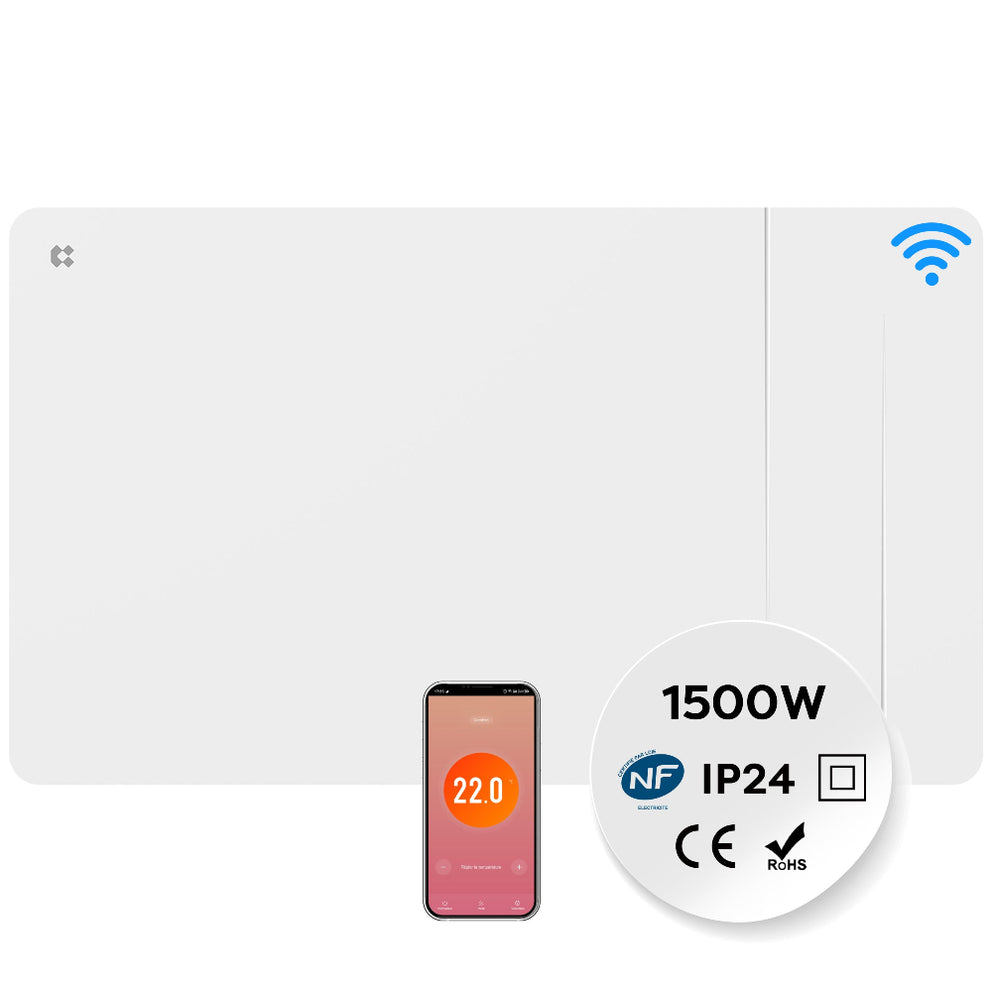
A storage heater is an electric heating appliance designed to store thermal energy and release it gradually over time. Instead of converting electricity directly into heat only when you need warmth, a storage heater first heats a thermal storage material—such as ceramic bricks, stone, concrete, or another heat-retaining material—and then releases the stored heat into the room.
Traditional storage heaters are commonly associated with off-peak electricity tariffs. They can charge during the evening or overnight, when electricity may be available at a lower rate, and release the stored heat during the day.
Modern storage heaters have developed considerably beyond traditional night storage systems. Improved insulation, thermostatic controls, timers, programmable settings, and smart controls can make modern models easier to manage and more responsive to changing heating needs.
For households looking for economical electric heating, understanding what a storage heater is, how storage heaters work, and the pros and cons of storage heaters can help determine whether this type of heating is suitable for a particular home.
What Is a Storage Heater?
A storage heater is an electric heater that stores thermal energy inside a heat-retaining core and releases that heat gradually.
The basic process is:
Electricity → Heating Element → Thermal Storage Core → Stored Heat → Gradual Heat Release
The thermal core may use ceramic, clay-based bricks, stone, concrete, or other materials with good heat-storage properties.
Traditional night storage heaters are designed around the idea of charging during cheaper off-peak electricity periods and releasing heat throughout the following day. This is why they are sometimes called night storage heaters, electric storage heaters, or thermal storage heaters.
Types of Storage Heaters
Storage heaters can generally be divided into three main types, depending on their controls, heat-retention performance, and level of automation:
1. Older Night Storage Heaters
Traditional models that charge overnight using cheaper-rate electricity. They usually have separate input and output controls. The input setting determines how much heat is stored, while the output setting controls how quickly that stored heat is released.
2. Modern Storage Heaters
Newer models with improved insulation and heat retention, often combined with thermostats, timers, programmers, or mobile-app controls. Some use fan-assisted systems to release stored heat more effectively and can help reduce energy costs compared with older models.
3. High Heat Retention Storage Heaters
The most advanced type, designed to retain stored heat for longer and release it more precisely when required. Many can automatically estimate the next day's heating needs based on factors such as heating habits and weather conditions, reducing the need for manual input adjustments.
How Do Storage Heaters Work?
The simplest way to understand how storage heaters work is to divide their operation into two stages: charging and heat release.
1. Charging the Thermal Core
During the charging period, electricity flows through heating elements inside the storage heater.
These heating elements convert electrical energy into heat and transfer that heat to the thermal storage core.
In a ceramic storage heater, the ceramic core gradually increases in temperature and stores thermal energy.
Traditional storage heaters were designed primarily around overnight charging because electricity was often available at a lower rate during off-peak hours.
For example:
Night:
The heating elements operate and charge the ceramic core.
Day:
The heating elements switch off, while the stored thermal energy is gradually released into the room.
This is the fundamental principle behind night storage heaters.
2. Releasing Stored Heat
Once the thermal core has been heated, it does not immediately become cold when the electrical heating elements switch off.
Instead, the core gradually transfers its stored energy to the surrounding room.
Heat can be released through:
- Natural convection
- Thermal radiation
- Controlled airflow in fan-assisted models
- The heater's external surface
The result is a longer period of warmth compared with a heater that only produces heat while its element is switched on.
What Is Inside a Storage Heater?
A typical storage heater consists of several main components.
1. Thermal Storage Core
The thermal core is the heart of the appliance.
It may use ceramic, refractory material, dense mineral material or another material capable of storing a substantial amount of heat.
A ceramic core is particularly suitable because it can withstand high temperatures and retain thermal energy for gradual release.
2. Heating Elements
Electrical heating elements are embedded within or positioned around the thermal core.
When electricity is supplied, the elements heat the core.
3. Thermal Insulation
Insulation surrounds the heat-storage material.
Its purpose is not to stop heat transfer completely—it is impossible to do that—but to control the rate of heat loss.
Better insulation means more of the stored energy remains available when you actually need it.
4. Controls and Thermostat
Modern storage heaters may include:
- Digital thermostats
- Timers
- Weekly schedules
- Temperature controls
- Heat-charge controls
- Output controls
- Smart Wi-Fi control
These features make it easier to match heating with your daily routine.
Can a Storage Heater Release Heat While It Is Charging?
Yes. A storage heater can release some heat while it is charging.
This is an important point that is sometimes misunderstood.
A storage heater does not completely isolate the heat inside the thermal core during the charging process. As the ceramic core becomes hotter, some heat naturally transfers through the insulation and casing into the surrounding room.
So, during charging:
Electricity → Heating element → Ceramic core
but at the same time:
Ceramic core → Casing → Room
The amount of heat released during charging depends on the heater's insulation, core temperature, casing design and heat-output controls.
Traditional Storage Heaters
Traditional storage heaters can release a noticeable amount of heat while charging. Because they have less sophisticated insulation and heat-output control, the room may become warmer overnight even though the main purpose of the charging period is to store heat for the following day.
Modern Storage Heaters
Modern storage heaters are designed to reduce unwanted heat loss during charging.
Better thermal insulation helps keep more energy inside the storage core until it is needed. Some models also use controlled heat release, thermostatic controls, timers or fan-assisted systems to make heat delivery more predictable.
Therefore, charging does not mean zero heat output. It means that most of the electrical energy is being directed toward storing heat for later use.
This distinction is particularly important when comparing a modern storage heater with a conventional electric radiator.
Storage Heater vs Conventional Electric Heater
A common question is:
What is the difference between a storage heater and an electric radiator?
The main difference is when electricity is converted into useful heat.
A conventional electric radiator generally produces heat when its heating element is operating.
A storage heater is designed to store heat first and release it later.
One important point is that both are electric resistance heating technologies. A storage heater does not magically create more heat from the same amount of electricity.
Its potential cost advantage comes mainly from when electricity is purchased and how heat is stored and delivered, rather than from breaking the basic laws of electrical heating.
| Feature | Storage Heater | Conventional Electric Radiator |
|---|---|---|
| Main principle | Stores heat and releases it later | Produces heat mainly while operating |
| Thermal core | Usually ceramic or another high-mass material | May have little or no thermal mass |
| Off-peak electricity | Particularly suitable | Usually less important |
| Heat after power is off | Yes | Depends on thermal mass |
| Heat control | Can be slower | Usually more immediate |
| Response time | Generally slower | Generally faster |
| Best suited to | Planned, longer heating periods | Flexible or occasional heating |
Storage Heater Pros and Cons
Understanding storage heater pros and cons is essential before buying one.
✓ Pros of Storage Heaters
-
1. Lower-Cost Off-Peak Heating
The biggest potential financial advantage is the ability to use cheaper off-peak electricity.
-
2. Long-Lasting Heat
The thermal core continues releasing heat after the charging cycle ends.
-
3. Consistent Warmth
Stored thermal energy can provide a more gradual heating experience rather than repeated high-power heating cycles.
-
4. Reduced Daytime Electrical Demand
The main charging cycle can occur outside peak electricity-demand periods.
-
5. Quiet Operation
Passive storage heaters have no fan or moving parts, making them very quiet.
-
6. Good for Planned Heating
They work particularly well for households with predictable heating schedules.
✗ Cons of Storage Heaters
-
1. Heat Is Stored Before You Need It
This is one of the biggest limitations. If you charge the heater overnight but do not need much heat the next day, some of that stored energy will still be released.
-
2. Slower Response
Storage heating is less responsive than an instant electric heater. If the weather suddenly becomes much colder, you may not have enough stored heat.
-
3. Large and Heavy
The thermal core adds considerable weight.
-
4. Installation Space
A storage heater can occupy more wall or floor space than some lightweight electric heaters.
-
5. Correct Sizing Is Important
An undersized heater may run out of stored heat too early. An oversized heater can cost more, take up more space and store more heat than necessary.
-
6. Off-Peak Tariff May Be Required
If your electricity tariff does not provide cheaper off-peak electricity, the financial benefit of traditional night charging may be reduced.
Are Storage Heaters Energy Efficient?
The answer depends on what you mean by "efficient."
An electric resistance heating element converts electrical energy into heat very effectively at the point of use. The key advantage of a storage heater is therefore not that it produces dramatically more heat from electricity.
Instead, a storage heater can improve energy-cost efficiency by allowing electricity to be consumed during lower-cost periods and by storing heat for later use.
For example:
Conventional electric heater
Electricity → Heat → Immediate room heating
Storage heater
Off-peak electricity → Heat → Thermal storage → Later room heating
If your electricity tariff has significantly cheaper off-peak rates, this can make storage heating financially attractive.
However, if your electricity price is the same throughout the day, the economic advantage of overnight charging may be much smaller.
Modern storage heaters can improve energy efficiency with smart controls, programmable heating schedules, open-window detection and room-temperature sensors. These features help heat your home only when needed, reducing unnecessary energy use. Actual savings depend on your heating schedule, room insulation, and electricity tariff.
Do Storage Heaters Use Electricity During the Day?
Traditional storage heaters primarily use electricity during their charging period, often overnight when off-peak electricity may be available at a lower rate.
The stored thermal energy is then gradually released during the day, so the main heating elements do not normally need to run continuously.
However, whether the stored heat is enough to keep your home comfortable throughout the day depends on several factors, particularly room size, insulation, property age and outdoor temperature.
For example, a well-insulated modern room may retain heat effectively, allowing the stored heat from the previous night to provide most of the day's heating. In contrast, an older property with poor insulation, draughty windows or high heat loss may lose stored heat more quickly. A larger room may also require more heat than a small room.
This means that some households may need additional daytime heating, especially during colder periods.
Modern storage heaters may provide additional electrical functions such as:
- Daytime boost heating
- Fan-assisted heat distribution
- Electronic controls
- Thermostats
- Timers and programmers
- Wi-Fi or smart controls
- Additional heating elements
If a daytime boost function is used, the heater consumes electricity during the day. Depending on your electricity tariff, this electricity may be charged at the standard daytime rate rather than the cheaper off-peak rate.
Do You Need Additional Heating During the Day?
There is no single answer for every home. Consider:
- Room size: Larger rooms generally require more heat to maintain a comfortable temperature than smaller rooms.
- Property age: Older homes can have higher heat loss, particularly if they have older windows, doors, or less effective insulation.
- Insulation: A well-insulated home can retain stored heat for longer, while poorly insulated rooms may become cold more quickly.
- Outdoor temperature: During very cold weather, the heat stored overnight may not be sufficient to maintain your preferred indoor temperature all day.
- Heat demand: If the room is occupied for long periods or you prefer a warmer indoor temperature, you may need additional heating.
Therefore, if your storage heater is no longer providing enough warmth during the day, using a daytime boost or supplementary heater may be necessary. However, this can increase electricity consumption and may cost more if your daytime electricity rate is higher.
The most economical approach is usually to match the heater's output and charging settings to the actual heat demand of the room, while also improving insulation and reducing draughts where possible. Checking your storage heater's controls and your electricity tariff can help you determine when additional heating is most cost-effective.
How Should You Set a Storage Heater for Your Room?
The right storage heater setting depends on how much heat your room is likely to lose during the day. Room size, insulation, property age, windows, ceiling height, and outdoor temperature can all affect how much stored heat you need.
A simple way to think about it is:
Required heating output (W) ≈ Room area (m²) × Heat-loss factor (W/m²)
Example: How Much Heat Does a Room Need?
Suppose you have a 15 m² living room in an older European home with average insulation.
Using a middle estimate of 100 W/m²:
15 m² × 100 W/m² = 1,500 W
The room may therefore require roughly 1.5 kW of heating output under the assumed conditions.
For older or poorly insulated homes, you can use 120–150 W per m² instead:
15 m² × 150 W = 2,250 W
However, always check the manufacturer's specifications before purchasing.
How to Calculate the Power & Electricity Cost of Your Heater
Understanding your heater's energy consumption helps you balance thermal comfort with home heating expenses. Use the formulas and live calculator below to estimate your daily, monthly, and annual running costs.
1. Consumption Formula
Consumption (kWh) = Power (W) × Duration (h) ÷ 1000
Converts wattage and operational hours into kilowatt-hours (kWh).
2. Electricity Cost Formula
Cost (€) = Consumption (kWh) × Electricity Rate (€/kWh)
Calculates financial cost based on your provider's local energy rate.
Interactive Running Cost Calculator
Adjust the values below to estimate your customized electricity costs:
Example Summary (20 m² Room @ 0.15 €/kWh)
| Criterion | Value |
|---|---|
| Required Power for 20 m² | 2000 W |
| Daily Consumption (5 hours/day) | 10 kWh |
| Daily Cost (at 0.15 €/kWh) | 1.50 € |
| Monthly Cost (30 days) | 45.00 € |
| Annual Cost (365 days) | 547.50 € |
How to Use a Storage Heater Efficiently
Using a storage heater correctly is important because the heat is normally planned in advance.
1. Keep Heat Output Controlled
If the heater has an output or airflow control, keep it relatively low when you do not need much heat.
Increase the heat output when the room requires more warmth.
2. Use Timers or Wifi
A programmable timer can help align heating with your daily routine.
For example:
- Morning: comfortable heating
- Daytime: reduced temperature if nobody is home
- Evening: increased heating when the room is occupied
- Night: prepare for the next charging cycle

3. Avoid Unnecessary Boost Heating
If the heater has a daytime boost function, use it carefully.
It can provide useful additional heat, but it may consume electricity at a higher tariff.
4. Improve Home Insulation
A storage heater cannot compensate indefinitely for excessive heat loss.
Improving:
- Wall insulation
- Roof insulation
- Windows
- Doors
- Draught sealing
can reduce the amount of heat your home requires.
5. Choose a Storage Heater with Open-Window Detection
When choosing a storage heater, consider a model with open-window detection. This feature can detect a sudden drop in room temperature, which may indicate that a window or door has been opened.
The heater can then automatically reduce or pause its heating output, helping to prevent energy from being wasted while the room is being ventilated.
This can be particularly useful in bedrooms, living rooms and other frequently ventilated spaces. For greater efficiency, look for a storage heater that combines open-window detection, programmable timers and adjustable heat output.
Are Storage Heaters Dangerous?
Storage heaters are not inherently dangerous when correctly installed, used and maintained.
However, like all electrical heating appliances, they can become hazardous if they are damaged, incorrectly installed or improperly operated.
Common safety considerations include:
1. High Surface Temperatures
The outer surface can become hot during operation.
Keep curtains, furniture, clothing and other combustible materials away from the heater.
2. Electrical Safety
The heater should be connected according to the manufacturer's installation requirements and local electrical regulations.
Overheating Protection
Modern electric storage heaters may incorporate overheat protection to reduce the risk of excessive temperatures.
Do Not Cover the Heater
Never cover a storage heater with clothing, towels or other objects unless the manufacturer explicitly permits it.
Blocking heat dissipation can increase operating temperatures.
3. Older Storage Heaters and Asbestos
Some older storage heating appliances may contain asbestos-containing materials.
If you have an old storage heater and suspect it may contain asbestos, do not open, dismantle or disturb it yourself. Seek advice from a qualified professional.
Are Modern Storage Heaters Better Than Older Models?
In many respects, yes.
Older night storage heaters were often designed around a relatively simple concept:
Charge overnight → release heat throughout the day
Modern storage heaters can provide much greater control.
Depending on the model, modern features can include:
- Better thermal insulation
- Improved heat retention
- Digital thermostats
- Programmable schedules
- Adaptive heating
- Room temperature sensing
- Electronic charge control
- Wi-Fi control
- Mobile app control
This helps address one of the biggest weaknesses of traditional storage heaters: the difficulty of matching stored heat with actual heating demand.

Ciarra Wi-Fi Electric Storage Heater with Ceramic Thermal Core
Engineered with a ceramic thermal storage core and dry inertia technology, this smart heater absorbs energy and releases gentle, long-lasting warmth—even after the active cycle ends.
- ✓ Ceramic Thermal Storage & Dry Inertia Heating
- ✓ Wi-Fi App & Digital Thermostat Control
- ✓ Comfort, Eco & Frost Protection Modes
- ✓ Ultra-Quiet Fanless & Wall-Mounted Design
FAQs
Does a Ceramic Storage Heater Dry Out the Air?
A storage heater does not directly remove moisture from the air.
Heating a room can, however, change relative humidity because warmer air can hold more water vapour. This can make the relative humidity reading fall even though the heater has not physically removed water from the room.
Can You Still Buy Storage Heaters?
Yes. Modern storage heaters are still available, and the technology has evolved significantly from traditional night storage heaters.
Today's models can combine thermal storage with:
Digital thermostats
Programmable controls
High heat retention
Smart scheduling
Wi-Fi connectivity
Adaptive temperature control
This is why modern storage heaters can be considerably more convenient than older models.
Can Storage Heaters Release Heat While Charging?
Yes. Some heat will normally escape from the thermal core during charging. Better insulation and heat-output controls can reduce and manage this heat loss.
Are Storage Heaters Efficient?
Storage heaters can be cost-effective because they can use cheaper off-peak electricity and store heat for later. Their financial efficiency depends heavily on the electricity tariff, heating demand, insulation, and operating settings.
You might be interested in:
Notícias

Sustaining Quality, Elevating Kitchens: The CIARRA Story So Far

From IFA to KBIS: Ciarra’s Global Expansion and 8-Year Milestone