Choosing the right size electric radiator is essential for keeping your home warm and comfortable without wasting energy. If the radiator is too small, it may struggle to reach the desired temperature, especially during cold European winters. If it is too powerful for the room, you may pay more than necessary upfront without gaining any real benefit.
The key is to match the radiator's heat output to the room's size, insulation, ceiling height, and heating requirements. Whether you are heating a bedroom, living room, bathroom or kitchen, understanding radiator wattage helps you choose a suitable model for your home.
The Basics of Electric Radiator Sizing
To begin to understand exactly what size electric radiator you require for the rooms in your home, there are a few things to keep in mind. This includes heat output and the various factors that influence your room’s heating requirements.
Heat Output
Heat output refers to the amount of heat a radiator can produce. This is usually measured in watts (W) or British Thermal Units (BTUs). Watts are the standard unit of power in the metric system, while BTUs are commonly used in the UK and US.
The heat output of your electric radiator – in fact, any radiator – should match the size and heating requirements of the room it’s in to ensure effective, efficient heating. So, rather than thinking about the physical size of your electric radiator, choosing the right solution depends more on its wattage and heat output.
What Radiator Wattage Should You Allow for per m²?
A common starting point when sizing an electric radiator is to allow approximately 70–100 W per square metre (m²) for a reasonably insulated room. This is a useful estimate rather than a precise calculation, as the actual requirement varies according to the building and local climate.
For poorly insulated rooms, properties with high ceilings or spaces exposed to cold external walls, you may need approximately 100–120 W/m² or more. A detailed heat-loss calculation is recommended for rooms with particularly challenging conditions.
How to Calculate Radiator Size for a Room?
You can estimate the required electric radiator output using a simple formula:
Required radiator wattage = Room area (m²) × Estimated heating requirement (W/m²)
For example, imagine you want to heat a 15 m² bedroom in a reasonably insulated home. If you use an estimate of 80 W/m², the calculation is:
15 m² × 80 W/m² = 1,200 W
A radiator rated at approximately 1,200 W would be a reasonable starting point for this room. Depending on the available models, you might compare 1,200 W and 1,500 W options before making your decision.
Now consider a 20 m² living room in an older property with limited insulation. If you estimate 120 W/m², the calculation becomes:
20 m² × 120 W/m² = 2,400 W
In this case, a single 2,000 W radiator may not provide sufficient heat during colder periods. A higher-output solution or two appropriately positioned radiators may be more suitable.
For a more accurate calculation, consider the following steps:
- Measure the room's length and width, then multiply them to find the floor area.
- Assess the insulation quality, window type, ceiling height and number of external walls.
- Select an appropriate preliminary wattage per square metre.
- Multiply the room area by the selected wattage.
- Compare the calculated requirement with the available radiator outputs and adjust the choice according to the room's heat loss.
For rooms with unusual layouts, large windows or high ceilings, a professional heat-loss assessment will provide a more reliable result.
|
Room size |
Recommended radiator output |
|---|---|
|
5 m² |
400–600 W |
|
10 m² |
700–1,000 W |
|
15 m² |
1,050–1,500 W |
|
20 m² |
1,400–2,000 W |
|
25 m² |
1,750–2,500 W |
|
30 m² |
2,100–3,000 W |
Which Criteria Affect a Radiator’s Wattage?
Several factors influence how much heating power a room needs. Two rooms with identical floor areas may require different radiator outputs because they lose heat at different rates.
1. Room Size and Ceiling Height
The larger the room, the more air and surrounding surfaces need to be heated. However, floor area alone does not tell the whole story.
A room with a ceiling height of 3 metres has a larger internal volume than one with a ceiling height of 2.4 metres. This can increase the heating requirement, particularly if the room has poor insulation.
2. Insulation Quality
Insulation is one of the most important factors when sizing an electric radiator.
Modern homes with well-insulated walls, roofs and floors generally retain heat more effectively. Older properties with draughty doors, uninsulated walls or single-glazed windows may lose heat more quickly and need a higher radiator output.
Improving insulation and sealing draughts can reduce heat loss and make your heating system more effective.
3. Climate and Outdoor Temperature
Homes in colder parts of Europe may need more heating capacity than similar homes in milder coastal regions.
The design outdoor temperature for your location also matters. A radiator that maintains a comfortable temperature during mild autumn weather may struggle during a prolonged winter cold spell if its output is insufficient.
4. Number and Size of Windows
Large windows and poorly insulated glazing can be significant sources of heat loss. Rooms with floor-to-ceiling windows or several external windows may require more heating power than rooms with smaller, modern double-glazed windows.
5. Room Orientation and External Walls
North-facing rooms in many European locations receive less direct sunlight than south-facing rooms. Rooms with two or more external walls may also lose heat faster than rooms surrounded by other heated spaces.
These differences should be considered when selecting the radiator's wattage.
6. Desired Indoor Temperature
A room maintained at 22°C generally needs more heat than one maintained at 18°C under the same outdoor conditions.
Bedrooms may be comfortable at a lower temperature, while bathrooms and living areas may require a warmer setting at certain times of the day.
7. Heating Habits and Usage Patterns
If you use a room throughout the day, you may prioritise consistent warmth. If you only use it in the morning and evening, a programmable thermostat may help you heat it according to your schedule.
However, intermittent heating does not eliminate the room's heat-loss requirements. The radiator must still be powerful enough to achieve the desired temperature within a reasonable time.
Do Electric Radiators Use a Lot of Power?
Electric radiators can use a substantial amount of electricity if they operate for long periods at high power. However, their actual consumption depends on the room's heat loss, the thermostat setting, the outdoor temperature and how long the heating is required.
An electric radiator's maximum electricity consumption can be estimated using this formula:
Electricity consumption (kWh) = Power (kW) × Operating time (hours)
For example, a 2,000 W electric radiator operating at full power for three hours uses:
2 kW × 3 hours = 6 kWh
If your electricity tariff is €0.30 per kWh, this would cost €1.80.
However, this calculation assumes that the radiator operates continuously at its full rated power. In practice, a thermostat may switch the heating element on and off or regulate its operation once the room reaches the target temperature.
A radiator rated at 2,000 W does not necessarily consume 2 kWh every hour throughout the day. Its average consumption depends on how much heat the room needs.
Related: Energy Efficient Electric Radiators: Do They Really Save You Money or Cost More?
What Wattage of Radiator Should You Choose for Each Room?
The ideal electric radiator wattage depends on the room’s floor area, insulation, ceiling height and desired temperature. As a general guide, allow around 70–100 W per m² for a reasonably insulated room, increasing to approximately 100–120 W per m² or more for poorly insulated spaces.
What Power Rating Should a Radiator Have in a Bedroom?
Bedrooms are typically heated to around 16–18°C for comfortable sleep, depending on personal preference. The ideal electric radiator wattage depends on the room’s size, insulation, ceiling height and heat loss.
For a reasonably insulated bedroom of 8–10 m², a 600–1,000 W radiator may be sufficient. A 1,000–1,500 W model may suit a 12–15 m² bedroom. For a poorly insulated 12 m² bedroom, a radiator of around 1,500 W may be more suitable to compensate for greater heat loss.
To choose the right output, consider the room’s exposure, window quality and insulation. A connected electric radiator can also help you schedule heating, adjust the temperature remotely and maintain a comfortable sleeping environment while managing energy consumption.
What Power Rating Should a Radiator Have in a Living Room?
Living rooms are typically maintained at around 20–21°C and often require consistent, evenly distributed heat throughout the day. The ideal electric radiator wattage depends on the room’s size, insulation, ceiling height and window quality.
For a 12–15 m² living room, a 1,000–1,500 W radiator may be sufficient, while a well-insulated 20 m² room may require around 1,500–2,000 W. For a well-insulated 25 m² living room, approximately 2,500 W is a useful starting point.
In larger or open-plan living spaces, using several radiators can help distribute heat more evenly and reduce cold spots. A smart electric radiator can also improve comfort through personalised schedules, automatic temperature control and remote adjustments.
What Power Rating Should a Radiator Have in a Bathroom?
Bathrooms generally require a higher temperature than other rooms to maintain comfort, particularly when showering or taking a bath. The ideal electric radiator wattage depends on the bathroom’s size, insulation, ceiling height and desired temperature.
For a very well-insulated 8 m² bathroom, an electric heated towel rail rated at around 750 W may be sufficient. However, the required output should be adjusted according to the room’s volume, heat loss and preferred level of warmth.
If you want to warm up your bathroom quickly, a convector heater is another option worth considering. It heats the surrounding air through natural convection, helping the room temperature rise quickly. This makes it particularly useful when you need warmth shortly before taking a shower or bath.
An electric heated towel rail offers an additional benefit by keeping towels warm and helping them dry between uses. Whichever option you choose, ensure the heater is suitable for the intended bathroom installation zone and meets the relevant electrical safety requirements.
For more guidance on choosing a suitable bathroom heater, see our guide: [Bathroom Radiators: What Features Define a Quality Heater?]
What Power Rating Should a Radiator Have in a Kitchen?
The ideal radiator wattage for a kitchen depends on its floor area, insulation, ceiling height and window size. Although cooking appliances can provide additional heat, the radiator should still be powerful enough to maintain a comfortable temperature during colder periods.
For a reasonably insulated kitchen, the following wattages provide a useful starting point:
- 6–8 m²: 400–800 W
- 10 m²: 700–1,000 W
- 12–15 m²: 850–1,500 W
- 20 m²: 1,400–2,000 W
For a poorly insulated kitchen or an open-plan kitchen-dining area, you may need a higher output or multiple radiators to distribute heat evenly.
A convector heater can be a practical choice if you want to warm up the kitchen quickly, as it heats the surrounding air through convection. For everyday comfort and better control over electricity consumption, consider a model with an adjustable thermostat and programmable timer.
Which Radiator Technology Should You Choose?
The radiator’s wattage is essential, but heating technology also affects how quickly a room warms up, how evenly heat is distributed and how comfortably the temperature is maintained. The best choice depends on your room’s heating requirements and your priorities for everyday comfort.
-
Ceramic inertia radiator: Ideal for rooms where gentle, even warmth is desired. The ceramic core stores heat and releases it gradually, helping maintain a stable temperature and reduce temperature fluctuations.
- Cast-iron inertia radiator: Suitable for those who prefer long-lasting warmth. Its cast-iron heating core has a high heat-storage capacity and gradually releases stored heat, even after the heating element switches off.
- Dual-heating-core radiator: Combines a responsive heating element with a dry-inertia core, such as ceramic or cast iron. This design can provide faster initial heating while maintaining comfortable, consistent warmth over time.
- Convector heater: A practical choice when you need to warm up a room quickly. It heats the surrounding air through convection, making it particularly useful for spaces that require rapid heating, such as bathrooms or occasionally used rooms. However, it generally retains less heat after switching off than an inertia radiator.
Ultimately, choose a radiator based on whether you prioritise rapid heating, long-lasting warmth or consistent temperature control. An appropriately sized radiator with a thermostat and programmable settings can also help manage electricity consumption.
Explore our range of energy-efficient electric radiators to find a solution suited to your home and heating needs.
You might be interested in:
- Electric Convector Heater Buying & Safety Guide
- Ceramic vs Aluminium Radiator: Can a Dual-Core Ceramic + Aluminium Radiator Combine Both?
- Are Electric Radiators Safe? (And Can You Leave Them On Overnight?)
Should You Choose a More Powerful Radiator for Better Heating?
Choosing a more powerful radiator is not always the best solution. The aim is to select a radiator with an output suited to the room’s size, insulation and heating requirements, ensuring comfortable warmth while keeping energy consumption under control.
An undersized radiator may struggle to reach the desired temperature, particularly in cold weather. It may need to operate for longer periods to compensate for heat loss, potentially leaving the room uncomfortably cold.
Conversely, an oversized radiator does not automatically consume more electricity or provide better energy efficiency. However, if its temperature controls are inadequate, it may cause overheating and temperature fluctuations. A properly controlled, higher-output radiator can still operate efficiently by switching off or reducing its heat output when the target temperature is reached.
The key is correct sizing. Choosing a radiator that matches the room’s heat loss, combined with an accurate thermostat and suitable heating schedule, helps maintain consistent thermal comfort and manage electricity consumption.
Mistakes to Avoid When Choosing a Radiator’s Output
When choosing an electric radiator, avoid these common mistakes to ensure comfortable heating and efficient energy use:
- Focusing only on floor area: Room size matters, but ceiling height, window size and external walls also influence heating requirements.
- Ignoring insulation quality: Poorly insulated rooms lose heat faster and may require a higher radiator output.
- Choosing a radiator that is too weak to save money: A radiator with insufficient power may struggle to maintain the desired temperature during cold weather.
- Assuming higher wattage always means higher energy consumption: Actual electricity use depends on operating time, heat loss and thermostat settings, not just the rated power.
- Using one radiator in a large room without considering heat distribution: Multiple smaller radiators may provide more even warmth and reduce cold spots.
- Overlooking temperature controls: A reliable thermostat and programmable timer help maintain a comfortable temperature without unnecessary heating.
The key is to choose the right radiator output for your room’s actual heating needs. Proper sizing helps balance thermal comfort, reliable performance and electricity consumption.
Which Electric Radiator Is Best for Your Room?
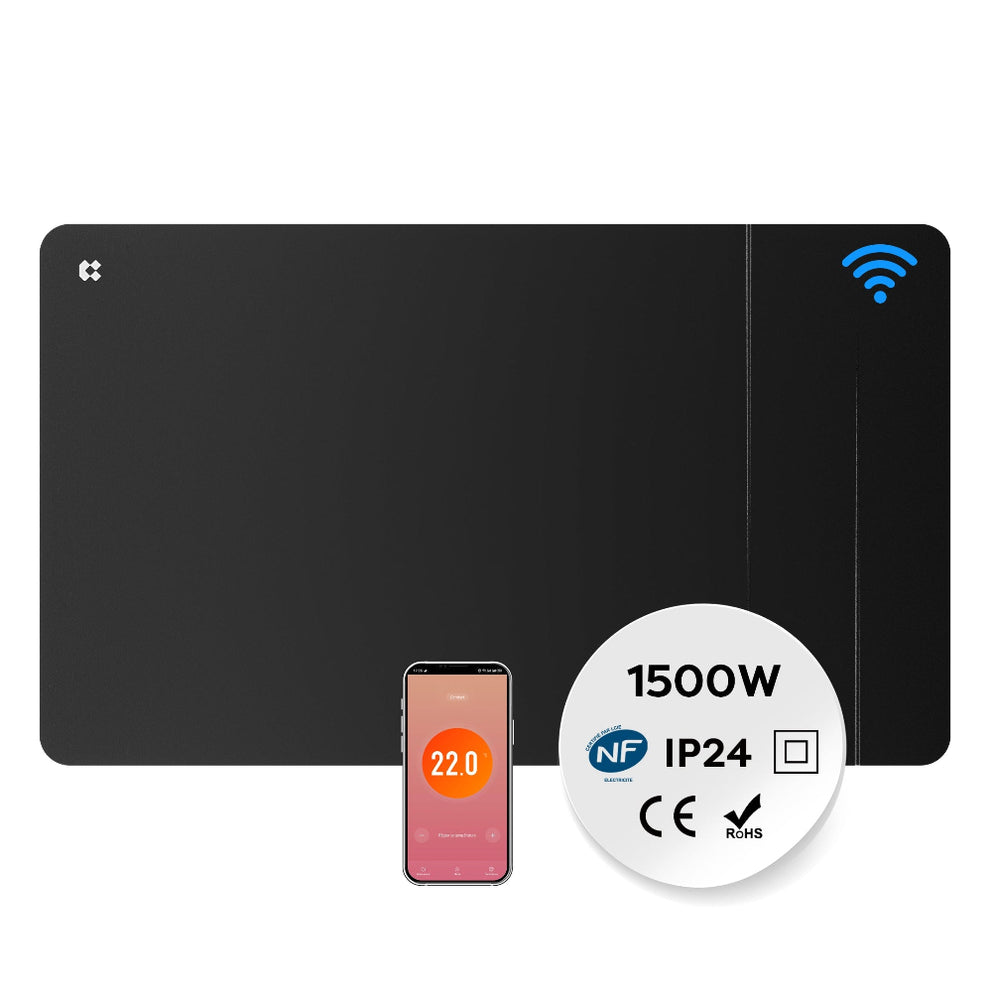
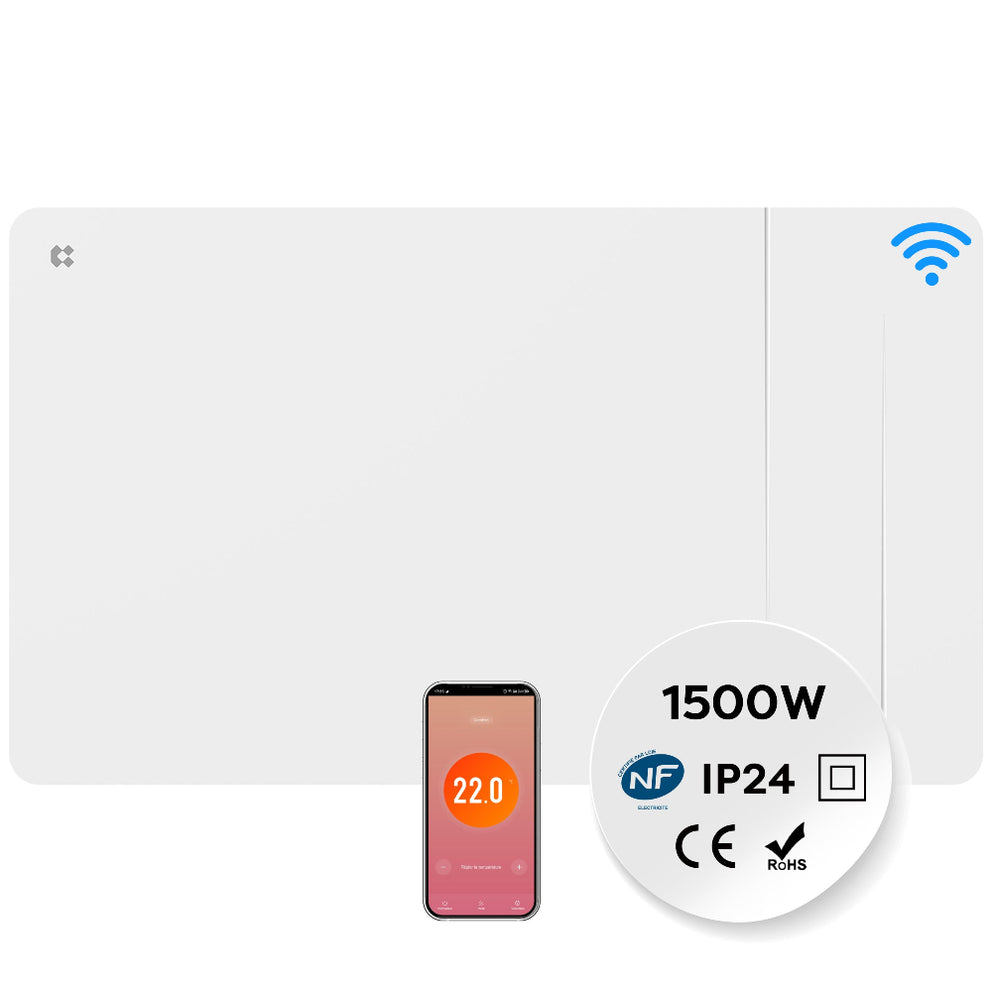
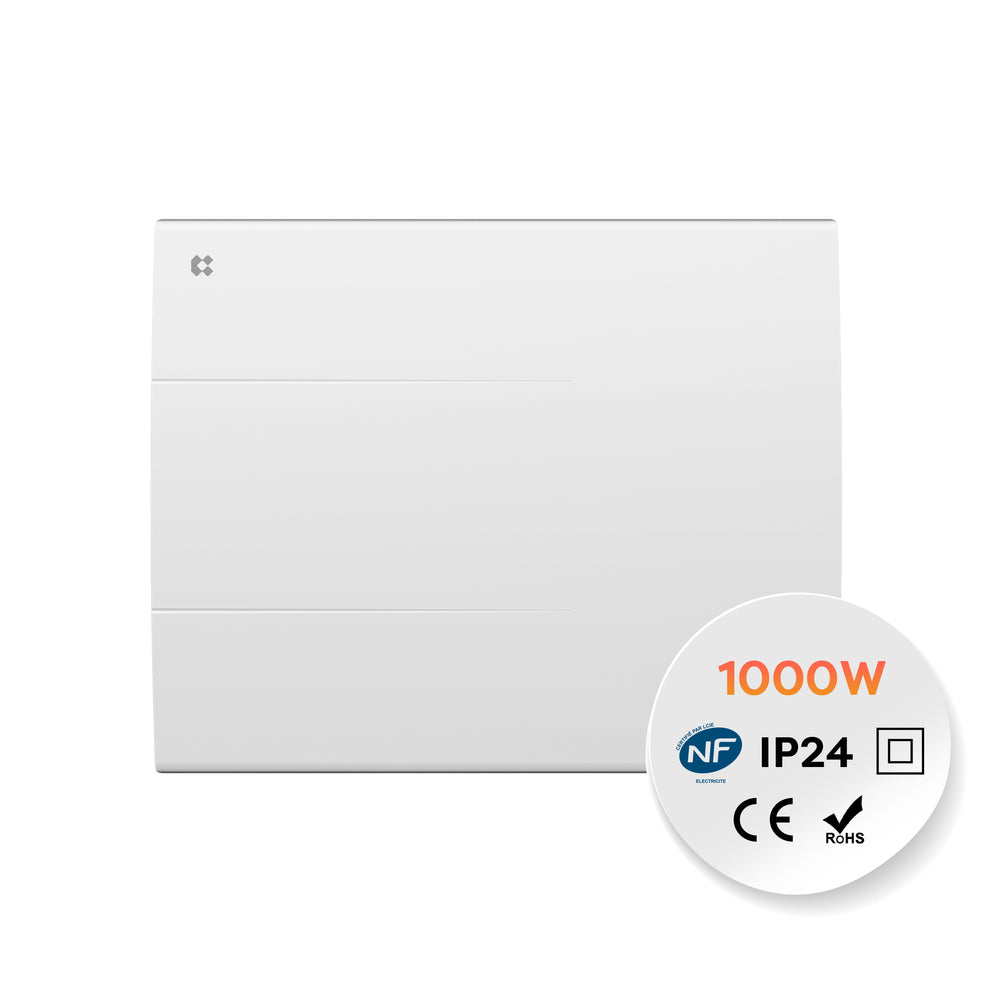
Choosing the right electric radiator depends on your room size, insulation and preferred heating style. The CIARRA range includes ceramic inertia radiators for steady warmth, dual-heating-core models for responsive heating combined with heat retention, and a convection heater for faster room warming.
1. CIARRA Ceramic Inertia Radiators
 |
CBHT10E – 1000 W Suitable for rooms up to approximately 10 m²/ |
 |
CBHT15E – 1500 W Suitable for rooms up to approximately 15 m² |
 |
CBHT20E – 2000 W Suitable for rooms up to approximately 20 m² |
2. CIARRA Dual-Heating-Core Ceramic Inertia Radiators
These models combine a ceramic heating core with an aluminium heating film, designed to provide responsive heating alongside the benefits of thermal inertia. They also feature Wi-Fi connectivity, allowing you to manage heating remotely.
 |
CBHTD10A-W – 1000 W Suitable for rooms up to approximately 10 m² Ideal for small bedrooms, compact offices and smaller rooms where you want programmable heating and connected controls. The white finish suits a variety of modern interiors. Key features include Wi-Fi control, an LCD display, weekly programming, open-window detection and overheat protection. |
 |
CBHTD15A-W – 1,500 W Suitable for rooms up to approximately 15 m² |
 |
CBHTD15A-B – 1500 W Suitable for rooms up to approximately 15 m² Offering the same heating output and core features as the white version, this black model is a stylish alternative for contemporary interiors. It is suitable for medium-sized rooms where connected temperature control and a sleek appearance are priorities. |
 |
CBHTD20A-W – 2000 W Suitable for rooms up to approximately 20 m² Designed for larger bedrooms and living rooms, this model offers greater heating capacity while retaining the benefits of the dual-core design. Wi-Fi connectivity, a digital thermostat and customisable weekly schedules help you manage your indoor comfort more conveniently. |
3. CIARRA X-Shaped Aluminium Convector Heater
 |
CBHX20-B – 1,680–2,000 W Suitable for rooms up to approximately 20 m² This convector heater is designed for people who want to warm a room quickly. Its X-shaped aluminium heating element heats the surrounding air through convection, making it useful for living rooms, bedrooms and other spaces where rapid warmth is a priority. The black metal-and-glass design, LED display, digital temperature control, Wi-Fi connectivity, weekly programming, open-window detection and overheat protection make it a practical option for everyday heating. Its caster bracket also supports flexible placement, subject to the manufacturer's installation and clearance requirements. |
At-a-Glance Comparison
|
Model |
Rated power |
Recommended room area |
Heating technology |
|---|---|---|---|
|
CBHT10E |
1,000 W |
Up to 10 m² |
Ceramic inertia |
|
CBHT15E |
1,500 W |
Up to 15 m² |
Ceramic inertia |
|
CBHT20E |
2,000 W |
Up to 20 m² |
Ceramic inertia |
|
CBHTD10A-W |
1,000 W |
Up to 10 m² |
Dual-core ceramic + aluminium |
|
CBHTD15A-W |
1,500 W |
Up to 15 m² |
Dual-core ceramic + aluminium |
|
CBHTD15A-B |
1,500 W |
Up to 15 m² |
Dual-core ceramic + aluminium |
|
CBHTD20A-W |
2,000 W |
Up to 20 m² |
Dual-core ceramic + aluminium |
|
CBHX20-B |
1,680–2,000 W |
Up to 20 m² |
Aluminium convection |
FAQs
How Many Watts per m² Are Needed for an Electric Radiator?
As a general guideline, allow around 70–100 W per m² for a reasonably insulated room. For poorly insulated properties, rooms with high ceilings or spaces with large windows, you may need approximately 100–120 W/m² or more.
What Radiator Output is Needed for a 20 m² Room?
For a reasonably insulated 20 m² room, an electric radiator rated at approximately 1,400–2,000 W is a useful starting point.
If the room is poorly insulated, has high ceilings or features large windows, you may need around 2,400 W or more.
Do You Need Several Radiators in a Large Room?
Not necessarily, but using several radiators can improve heat distribution in large or irregularly shaped rooms. A single radiator may provide sufficient total heat output but leave areas far from the unit feeling colder.
When choosing multiple radiators, ensure their combined output meets the room's heating requirements and position them to minimise cold spots. Also check that the electrical circuit can safely support the total load.
How can I tell if my radiator is powerful enough?
A properly sized radiator should quickly bring the room to the desired temperature and then maintain stable warmth without running continuously.
If the room remains cold despite continuous operation, the installed output may be insufficient or heat loss may be too significant.
Which Is Better: A Ceramic Inertia Radiator or a Convector Heater?
A ceramic inertia radiator stores heat in its ceramic core and releases it gradually, making it suitable for maintaining steady warmth over time. A convector heater warms the surrounding air through convection and is useful when you want to raise the room temperature quickly.
The best option depends on your heating routine. For regular heating, ceramic inertia may offer a comfortable, gradual heat release. For occasional use or rapid warming, a convector heater may be more suitable. Neither technology inherently uses less electricity for the same amount of useful heat delivered to the room.
What Is the Best Temperature to Set on an Electric Radiator?
The ideal temperature depends on the room and personal preference. As a general guide, bedrooms are often kept around 16–18°C for sleeping, living rooms around 20–21°C, and bathrooms around 22–24°C when in use.
Lowering the target temperature when a room is unoccupied can help reduce energy consumption. Avoid setting the thermostat unnecessarily high, as this does not make the radiator heat the room more efficiently.
News

Sustaining Quality, Elevating Kitchens: The CIARRA Story So Far

From IFA to KBIS: Ciarra’s Global Expansion and 8-Year Milestone